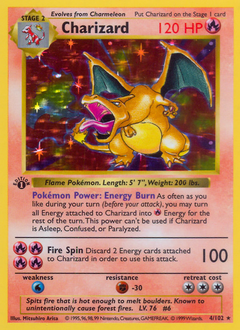
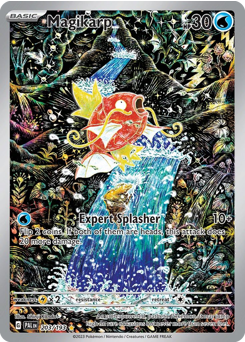
The short answer: only for a small slice of cards
Grading is not a default move, and treating it like one is how collectors lose money. Slabbing pays on expensive cards that are genuinely hard to pull in perfect condition, and it loses on almost everything else. The reason is simple: grading costs a flat fee per card, and that fee eats the entire premium on a cheap card. The problem is rarely the age of the card — it's the price. A common that feels old and special is still bulk, and paying to encase it just converts a few dollars of value into a loss. Before you send anything, the honest question is whether this specific card clears the bar, and most don't.

The raw price in your hand is the biggest lever
The single strongest predictor of whether grading pays is what the raw card sells for right now. As a rule of thumb, cheap cards lose almost every time — the fee alone is larger than any grade could add. Cards you can sell raw for roughly seventy-five to a couple hundred dollars are closer to a coin flip. Only above that, and only when a real PSA 10 premium exists, do the odds turn favorable. The pattern collectors keep finding when they price out large batches is stark: something like four out of five cards lose money the moment they're graded, and for recent cards it's close to all of them. Treat those figures as the shape of the thing, not exact math — but the shape is consistent.
You need both high value AND a fat PSA 10 multiple
Expensive alone isn't enough. For grading to pay, the PSA 10 price has to sit far enough above the raw card to cover the fee and the very real chance you pull a 9 instead of a 10. A costly card whose perfect copy sells for only a little more than raw is a trap: after fees and an imperfect grade, you can end up behind where you started by selling it raw. The cards that actually print money are the ones where a gem-mint copy is genuinely scarce, so the 10 commands a large multiple. Value and multiple are two separate tests, and a card has to pass both.
Modern PSA 9 is no-man's-land
Here's the trap that catches most modern submissions. For a recent card, a PSA 9 usually sells at or below what a clean raw copy plus the grading fee costs — the graded 9 often clears only a few dollars over its raw twin. That means when you grade a modern card, you're not really buying the value of 'graded,' you're betting almost entirely on hitting the 10. Miss the 10 and you've typically spent the fee to make the card worth roughly what it already was. The old idea that a slab adds value regardless of grade simply doesn't hold for modern cards anymore.
Why modern 9s are so weak (and why people just buy them)
The premium that used to attach to 'graded' now attaches to 'perfect.' Modern alt arts and special illustration rares come out of packs pristine in enormous numbers and get graded immediately, so 9s are abundant and the raw copies are already near-mint. Anyone who wants the card can buy a sharp raw for nearly the same money, which leaves little room above raw for a 9 to sell into. That's why a lot of collectors deliberately buy modern PSA 9s — and even discounted 8s and 7s — at close to raw prices for their binder rather than gambling on grading their own. If you want a 9, it's usually cheaper and safer to buy one than to make one.
Vintage flips the math
Old cards behave the opposite way, and it's worth understanding why. Most raw vintage has some wear — edge whitening, soft corners, off-centering — so high grades are genuinely hard to hit, and a graded copy of any decent grade carries a real premium over a typical raw one. A vintage PSA 8 is usually still worth meaningfully more than a played raw copy, and the premium on vintage 8s, 9s, and 10s is far larger than on modern cards. Vintage wins on average not because the cards are old, but because clean copies are scarce and pricey. The scarcity does the work — the same scarcity that modern bulk-pulled cards simply don't have.
Skill in card selection is most of the game
This is where the honest debate lives, and it's a genuine tradeoff rather than a settled question. The batch datasets describe the average submission: for a random card sent in, a 9 is not a safe floor, and the odds of losing money are high. But experienced submitters who carefully pre-screen report much higher gem rates than that baseline. Both can be true at once — a random submission is a bad bet, and a skilled picker who only sends near-flawless copies can profit. What everyone agrees on is that the value is in the 10, and profit comes from card selection, not from grading itself. A huge share of the current backlog is 'pack fresh' cards that had no business being graded — and pack fresh is not a 10.
The smartest workflow: use the raw market as a free look
If you do want to grade for profit, there's a method that turns it from a gamble into a decision. Buy the raw card, inspect it in hand under good light and magnification, and grade only the copies that genuinely pass — then relist the rest. Eating a few dollars reselling a card that didn't make the cut is far cheaper than paying the fee to encase a card that comes back a 9. Pre-grading a card takes only a few minutes; sourcing gem-worthy raws is the real work. Inspect centering, corners, edges, and surface, and go in trying to prove the card is not a 10 rather than talking yourself into it. If you can't find the flaw, you may have a winner.
Right now is a bad time for cheap grading
Timing matters, and the current environment is unfavorable for bulk submissions. PSA's backlog swelled to millions of cards, and they paused their cheap 'Value' tiers in response — the cheapest slot available now runs around eighty dollars per card with a wait measured in weeks. The favorable batch math that circulates was mostly calculated on the old sub-twenty-five-dollar fee, so today's economics are materially worse. Fees like these move over time, so treat exact numbers as a snapshot, but the direction is clear: at a higher entry fee, the only modern cards worth sending are the high-end ones you'd have paid an upcharge on anyway. The cheap-bulk play is, for now, gone.
Good reasons to grade that have nothing to do with flipping
Profit isn't the only reason to slab a card, and the flip math shouldn't scare you off the legitimate ones. Grading authenticates a card, which matters more as counterfeits get better — a slab is a verified-genuine copy. It physically protects the card in a sealed case. It satisfies the collector's want to have that number locked into a collection. And it smooths selling: a slab holds a fixed, sale-verified grade, so a buyer can't talk a near-mint card down to 'lightly played' the way they can with a raw one, which is why consignment houses prefer slabs. If any of these is your reason, grade freely — just don't expect the flip economics to reward you on top of it.
The practical default: protect the raw card well
For the vast majority of cards, the right move isn't grading at all — it's storing the raw card so well that its condition never becomes the reason it loses value. A raw card kept near-mint stays sellable, stays gradeable if it ever earns it, and costs a tiny fraction of a grading fee to protect. Sleeve valuable singles, drop them in rigid toploaders, and give your best display cards a magnetic one-touch case on the shelf. That approach keeps every option open: you can always grade later if a card appreciates into the range where it pencils out, but you can't un-crease a card you stored carelessly. Protection is the decision that pays on every card, not just the rare few.