Skip to content
NinePocket
Know your cards

Pokémon Card Rarity Symbols Explained (Every Symbol)

By the NinePocket team · Updated August 17, 2026 · 11 min read

That little symbol in the bottom corner tells you how rare a card is. Here is every Pokémon card rarity symbol — the classic circle, diamond and star, the full Scarlet & Violet ladder of black, silver and gold stars, the new Mega Evolution-era rarities, promo stamps, and how the Japanese letter codes line up against them.

Where to find the rarity symbol

On almost every Pokémon card there is a tiny symbol in the bottom corner, usually sitting next to the card number like '4/102'. On older cards it is bottom-left; on most modern ones it is bottom-right. That symbol is the card's rarity, and learning to read it means you can sort a fresh pack into bulk and keepers without an app or a price check. Two caveats before the list. Some special cards — full arts, secret rares, and anything where the illustration runs to the card edge — move the symbol or print it over artwork, so it can take a second to find. And a handful of cards, particularly promos and certain Japanese prints, carry no rarity symbol at all, which is information in itself rather than a printing error.
BCW Penny Sleeves (1,000 count)
Double-sleeve valuable cards before they go in a page — penny sleeve inside a snug fitted sleeve.
View on Amazon →

Affiliate link

The classic three: circle, diamond, star

For most of the game's history, three symbols covered everything you would pull from a pack, and all three still print on modern cards exactly as they always have:

  • Black circle ● — Common. The most-printed cards in any set, usually basic unevolved Pokémon and basic Energy. Four to five per English booster pack.
  • Black diamond ◆ — Uncommon. A step up, mixing evolved and unevolved Pokémon, and the home of the vast majority of Trainer cards.
  • Black star ★ — Rare. Evolved and Legendary Pokémon, with at least one guaranteed in an English booster pack.

Holo Rare — and the Scarlet & Violet change

A Rare card with a shiny, reflective background behind the Pokémon was traditionally called a Holo Rare: the same black star, but with foil. For twenty years that distinction did a lot of work, because a non-holo Rare and a holo Rare of the same card could be worth very different amounts. Here is the key modern update. Starting with the Scarlet & Violet era in 2023, every Rare prints holographic. There is no longer a separate Holo Rare tier — all black-star Rares are foil now, which means the shine on a modern Rare tells you nothing beyond 'this is the Rare slot'. Commons, Uncommons and Rares can also come as Reverse Holos, officially Parallel foil, where the card shines everywhere except the artwork. Reverse holo is a finish rather than a rarity: the symbol still says what the card actually is.

The modern rarity ladder, symbol by symbol

Scarlet & Violet replaced years of fan-made nicknames with official names and a consistent system of stars, reading up through black, silver and gold. This is the ladder as it stands, from the standard tiers through the secret rares that sit past the end of a set:

  • Two black stars ★★ — Double Rare. The standard Pokémon ex cards. Premium, but the plain version usually stays affordable.
  • Two silver stars — Ultra Rare. Full-art Pokémon ex and full-art Supporters, with the artwork stretched over the whole card.
  • One gold star — Illustration Rare (IR). Special full-art versions of regular, non-ex Pokémon, prized for the art rather than the mechanic.
  • Two gold stars — Special Illustration Rare (SIR, 'SAR' in Japan). The premium full-card alternate arts of ex Pokémon and Supporters, and the tier most modern chase cards live in.
  • Three gold stars — Hyper Rare. The textured gold cards that close out a Scarlet & Violet-era set's numbering.
  • Magenta star — ACE SPEC Rare. Powerful Trainer cards limited to one per deck, first seen in Boundaries Crossed in 2012 and brought back in the Scarlet & Violet era from Paldean Fates onward. The whole card design is built around magenta and cyan, so they are hard to miss.

The Mega Evolution era: two new symbols

The Mega Evolution era, which opened with the Mega Evolution expansion in September 2025 and continues through the current sets, kept the Scarlet & Violet ladder intact and added at the top of it. Mega Hyper Rare, marked with a gold star on a black border, is the rarity for Mega Evolution Pokémon ex, and in practice it has taken over the slot that plain Hyper Rare occupied — across the era's sets so far it is the Mega Hyper Rares that close out the numbering, and the ordinary three-gold-star Hyper Rare has not appeared alongside them. There are usually only one or two per set, which makes them the scarcest cards in the era by some distance. The second addition arrived with Ascended Heroes in January 2026: Mega Attack Rare, marked by two pastel stars, one pink and one green, taken from the colours of Mega Evolution Energy. These are full-art secret cards showing a Mega Evolution Pokémon ex with the card's headline attack rendered in large foreign-language text across the illustration, a deliberate callback to the M Pokémon-EX cards of the XY era. Ascended Heroes printed seven of them.

Secret rares, promos and the cards without symbols

A 'secret rare' is not its own symbol — it is any card numbered higher than the set's advertised size, so a card reading 201/198 is a secret rare by definition. Ultra Rares, Illustration Rares, Special Illustration Rares, Hyper Rares and Mega Hyper Rares are all normally secret rares, which is why the two numbers on a card are worth reading together with the symbol rather than instead of it. Promo cards are the other category that breaks the pattern: they carry a black star with the word PROMO instead of a rarity symbol, and they do not come from regular booster packs at all — they arrive in Elite Trainer Boxes, collection boxes, event distributions, tie-ins and league prizes. Some promos are worth nothing, a few are worth a great deal, and there is no way to tell from the stamp alone, because the stamp says only 'this did not come from a pack'.

Japanese cards use letters, not symbols

If you buy Japanese cards, the system looks completely different and maps over almost cleanly. Since the Black Collection and White Collection era, Japanese releases have used bolded letter codes in place of the international symbols. Once you know the pairs, a Japanese card is as readable as an English one:

  • C — Common. U — Uncommon. R — Rare.
  • RR — Double Rare, the equivalent of the two black stars on a Pokémon ex.
  • AR — Illustration Rare (one gold star internationally).
  • SAR — Special Illustration Rare (two gold stars).
  • UR — Hyper Rare (three gold stars).
  • MUR — Mega Hyper Rare. MA — Mega Attack Rare.
  • ACE — ACE SPEC Rare.

What the symbol does not tell you

Rarity is the fastest first filter for value, and it is genuinely useful for that — but it is a filter rather than a verdict, and treating it as one is the most common beginner mistake in reading a card. Four things it leaves out. It does not know which Pokémon is on the card, and a gold-star Special Illustration Rare of Charizard can be worth twenty times the identical rarity of an unpopular Pokémon in the same set. It does not know the condition, which can move a valuable card by a multiple. It does not know the print run, so an old Rare from a small set can beat a modern secret rare. And it does not distinguish printings, which is why a 1st Edition or Shadowless Base Set card and its Unlimited counterpart share a symbol and not a price. Use the symbol to decide which cards get a sleeve or a magnetic holder and which go straight into a binder page, then check the actual price for anything that clears the bar.

How to use this when you collect

Two habits make the whole system pay off. First, sort a fresh pack by symbol before anything else — commons and uncommons to the bulk pile, everything from Double Rare upward into a sleeve, reverse holos wherever your system puts them. It takes seconds and it means nothing valuable ever sits loose on a table. Second, when you are building a set, decide early whether you are chasing the base set (everything up to the printed set size) or the master set (every card including secret rares and reverse holos), because the rarity ladder is what separates a fifteen-page project from a fifty-page one. Our binder organising guide covers laying either out, and the value guide covers what to do with the cards that clear the top of the ladder.
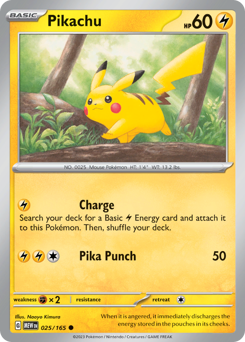

See each rarity in the wild

Pikachu (151)
Pikachu
151 · $1.41
The black circle in the corner marks a Common, the most-printed cards in any set. Even a name like Pikachu is pocket change at this rarity.
See listings
Charmeleon (151)
Charmeleon
151 · $0.47
A black diamond means Uncommon, one step up from Common. Still bulk-bin pricing here, where the symbol rather than the Pokémon sets the floor.
See listings
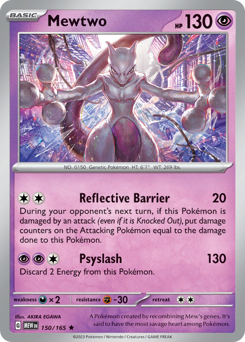
Mewtwo (151)
Mewtwo
151 · $4.17
The black star is the classic Rare, one guaranteed per pack in older sets. Since Scarlet & Violet these print holographic by default, but the star symbol is unchanged.
See listings
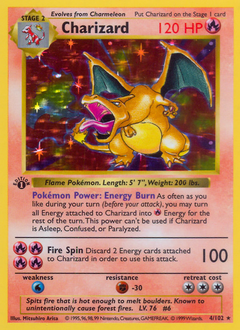
Charizard (Base)
Charizard
Base · $852
The original Holo Rare look: same black star, but with foil shimmering behind the artwork. This 1999 Base Set Charizard by Mitsuhiro Arita is the card that defined the tier.
See listings
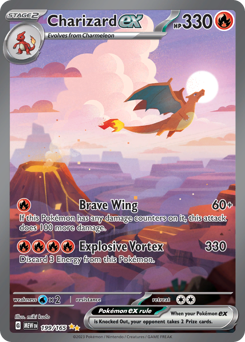
Charizard ex (151)
Charizard ex
151 · $8.50
Two black stars mean Double Rare, the symbol on every standard Pokémon ex since 2023. It flags a premium card, though the plain version stays affordable.
See listings
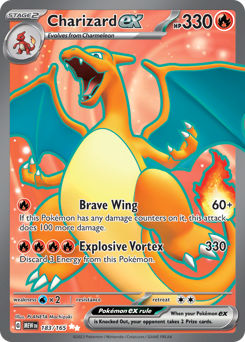
Charizard ex (151)
Charizard ex
151 · $39.94
Two silver stars mark an Ultra Rare, here the full-art version of the same Charizard ex with the art stretched over the whole card.
See listings
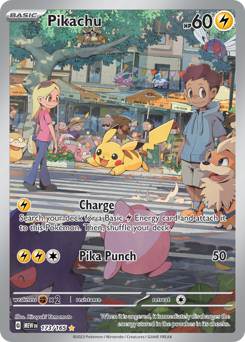
Pikachu (151)
Pikachu
151 · $91.02
One gold star is an Illustration Rare, a special full-art take on a regular (non-ex) Pokémon. This 151 Pikachu shows how high an IR can climb, ranking among the set's priciest pulls.
See listings
Charizard ex (151)
Charizard ex
151 · $369
Two gold stars mean Special Illustration Rare, the premium alternate-art ex. A gold-star Charizard like this sits among the most valuable cards in the modern game.
See listings
Mew ex (151)
Mew ex
151 · $29.68
Three gold stars mean Hyper Rare, the textured gold cards that close out a set's numbering. The metallic gold finish is unmistakable in hand.
See listings

Quick answers

What do the rarity symbols on Pokémon cards mean?

The symbol beside the card number is the card's rarity. A black circle is Common, a black diamond is Uncommon, and a black star is Rare. Above those, the modern system uses stars in combination: two black stars for Double Rare, two silver stars for Ultra Rare, one gold star for Illustration Rare, two gold stars for Special Illustration Rare, and three gold stars for Hyper Rare. A magenta star marks an ACE SPEC Rare, and a black star with the word PROMO marks a promo card rather than a pack pull.

What are the Scarlet & Violet rarity symbols?

Scarlet & Violet kept the classic circle, diamond and star and added five official tiers above them: Double Rare (two black stars) for standard Pokémon ex, Ultra Rare (two silver stars) for full-art ex and Supporters, Illustration Rare (one gold star) for special full arts of non-ex Pokémon, Special Illustration Rare (two gold stars) for premium alternate-art ex and Supporters, and Hyper Rare (three gold stars) for the textured gold cards that close out a set. It also brought back ACE SPEC Rare, marked with a magenta star.

What is a Mega Hyper Rare?

The top rarity of the Mega Evolution era, marked by a gold star on a black border and reserved for Mega Evolution Pokémon ex. There are usually only one or two in a set, which makes them the scarcest cards of the era. In practice they occupy the slot that plain Hyper Rare held in Scarlet & Violet — across the Mega Evolution sets so far, it is the Mega Hyper Rares that close out the card numbering and the three-gold-star Hyper Rare has not appeared alongside them.

What is a Mega Attack Rare card?

A rarity introduced with the Ascended Heroes expansion in January 2026, marked by two pastel stars — one pink and one green, matching the colours of Mega Evolution Energy. They are full-art secret cards showing a Mega Evolution Pokémon ex with the card's headline attack printed in large foreign-language text across the illustration, a deliberate callback to the M Pokémon-EX cards of the XY era. Ascended Heroes printed seven of them.

What is a secret rare Pokémon card?

Any card numbered higher than the set's advertised size — a card reading 201/198 is a secret rare because the set officially contains 198 cards. It is not a symbol of its own. Ultra Rares, Illustration Rares, Special Illustration Rares, Hyper Rares and Mega Hyper Rares are normally all secret rares, so the two numbers on a card and the symbol beside them are worth reading together rather than one instead of the other.

Where is the rarity symbol on a Pokémon card?

In the bottom corner beside the card number — bottom-left on older cards, bottom-right on most modern ones. On full arts, secret rares and any card where the illustration runs to the edge, it may be moved or printed over artwork, so it can take a moment to find. Some cards, particularly promos and certain Japanese prints, carry no rarity symbol at all, which tells you something in itself rather than indicating a misprint.

Do Japanese Pokémon cards use different rarity symbols?

Yes — letters instead of symbols. Since the Black Collection and White Collection era, Japanese cards use bolded codes: C for Common, U for Uncommon, R for Rare, RR for Double Rare, AR for Illustration Rare, SAR for Special Illustration Rare, UR for Hyper Rare, MUR for Mega Hyper Rare, MA for Mega Attack Rare and ACE for ACE SPEC. The tiers correspond closely to the international ones, so once you know the pairs a Japanese card reads just as quickly.

Does a higher rarity always mean a card is worth more?

No, and this is the most common way the symbol misleads people. Rarity sets a floor, not a price. Which Pokémon is on the card often matters more — a gold-star Special Illustration Rare of a popular Pokémon can be worth many times the identical rarity of an unpopular one in the same set. Condition, print run and the specific printing (1st Edition and Shadowless versus Unlimited, for example) all move price without changing the symbol. Use rarity to decide what deserves a sleeve, then check the actual sold price.

Are all Pokémon rare cards holo now?

In the current game, yes. From Scarlet & Violet onward every black-star Rare prints holographic, so the separate Holo Rare tier no longer exists — the shine on a modern Rare simply means it came out of the Rare slot. On vintage cards the distinction is real and matters a great deal, since holo and non-holo Rares of the same card can be worth very different amounts.

Ultra Pro One-Touch Magnetic Holder (35pt)
Display a chase card on a shelf — UV-protective magnetic case for single cards.
View on Amazon →

Affiliate link

Keep reading

How to Tell If a Pokémon Card Is Valuable
Found a card and wondering if it is worth something? Value comes down to a handful of factors stacked together — rarity, the Pokémon, the artwork, condition and the specific printing. Here is the sixty-second checklist, how to read each factor honestly, where to check a real price, and why old does not mean valuable.
Holo vs Reverse Holo vs Non-Holo: What's the Difference?
Holo, reverse holo, non-holo — they look similar in a binder but mean different things. Here is how to tell them apart in five seconds, how many reverse holos a modern pack actually contains, the foil patterns each era used, whether the finish is worth anything, and why foil cards curl.
How to Spot a Fake Pokémon Card
Counterfeit Pokémon cards are everywhere — on marketplaces, at flea markets, even in some stores. Here's how to tell a fake from the real thing, which tests actually work, and the popular ones that don't.