The short version
A Pokémon card's value comes from five things stacked together: how rare it is, which Pokémon it shows, how special the artwork is, what condition it is in, and how scarce the specific printing is. A card generally has to score high on several of these to be worth real money. A beat-up Common of an unpopular Pokémon is bulk no matter how old it feels, while a mint gold-star Charizard alternate art can be worth hundreds or thousands. The honest framing that saves the most disappointment: the overwhelming majority of Pokémon cards ever printed are worth close to nothing, and that is the normal outcome rather than bad luck. What follows is how to find the few that are not.
The sixty-second checklist
Before reading anything in detail, run the card through these in order. If it fails the first three, you can stop — you are holding bulk, and that is fine:
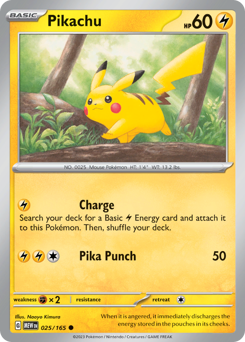
- Rarity symbol, bottom corner. Circle or diamond means Common or Uncommon and almost certainly bulk. A star or any silver/gold star combination is worth continuing with.
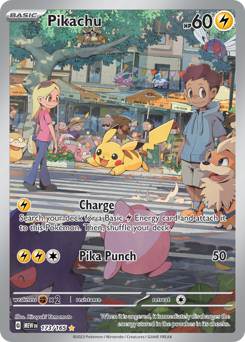
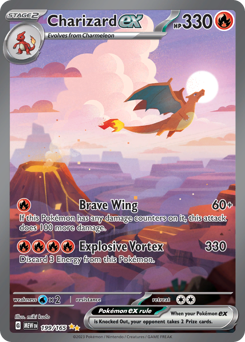
- Card number versus set size. If the first number is bigger than the second (201/198), it is a secret rare and worth a proper look.
- The Pokémon. Charizard, Pikachu, Mewtwo, Umbreon and the other fan favourites carry a real premium that obscure Pokémon do not.
- The card type. A full art, alternate art, textured gold or illustration rare is a different animal to the plain version of the same card.
- The finish. Holo, reverse holo or flat — worth noting, worth the least of anything on this list.
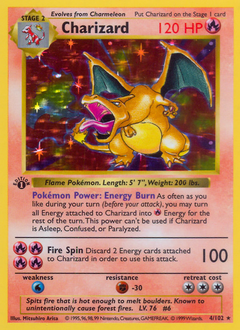
- The era and printing. A vintage card needs its printing identified: on Base Set, look for a 1st Edition stamp below the artwork on the left, and for the absence of a drop shadow on the right side of the artwork box, which marks a Shadowless print.
- Condition, at arm's length. Hold it up: is the border even, are the corners sharp and white-free, is the surface clean? Anything less than 'looks unplayed' costs real money on a card that had value.
1. Rarity
Start with the symbol in the bottom corner. Commons (●), Uncommons (◆) and basic Rares (★) are rarely worth much on their own, and the fact that a modern Rare is shiny does not change that — since the Scarlet & Violet era every Rare prints holographic, so the foil on a modern Rare is standard rather than special. Value lives in the tiers above: Double Rares, Ultra Rares, Illustration Rares, Special Illustration Rares, Hyper Rares, the Mega Evolution era's Mega Hyper Rares, and secret rares generally, meaning any card numbered above the set size. Rarity is the fastest filter and the least conclusive one — it sets a floor rather than a price. If you are not sure what a symbol means, our rarity guide breaks down every one, including the Japanese letter codes.
2. The Pokémon itself
Popularity drives demand, and it drives it harder than most people expect. Charizard is in a league of its own — its best card ranks near the top of nearly every set it appears in — followed by fan favourites like Pikachu, Mewtwo, Lugia, Rayquaza, Umbreon and the rest of the Eeveelutions. The same rarity in the same set and the same condition will sell for a large multiple on a popular Pokémon versus an obscure one. This factor is also the most durable of the five, because it is driven by nostalgia and character affection rather than by print runs, and those do not change when a set goes out of print. When in doubt, a card of a beloved Pokémon is the safer bet, and a card of a Pokémon nobody can name is bulk almost regardless of what its symbol says.
3. The artwork and card type
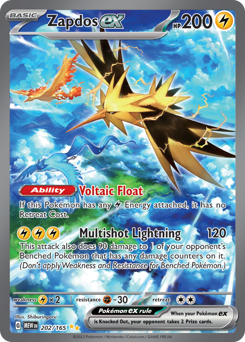
How a card is printed matters enormously, and on modern cards it is often the biggest single lever. Full-art and alternate-art versions, illustration rares and textured gold cards command large premiums over the plain version of the same Pokémon in the same set. Cards with special mechanics — ex, GX, V, VMAX, VSTAR and the current Mega Evolution ex — are where most of that premium art lives, which is why the suffix on a card is a useful early signal. A regular ex might be a few dollars while its Special Illustration Rare counterpart is a genuine chase card, and the difference is entirely the art treatment. Illustrator matters too: certain artists have followings that push their cards above what the rarity alone would suggest, which is a real and underrated angle for collectors.
4. Condition, honestly
For anything with value, condition is make-or-break, and this is where optimistic self-assessment costs people the most money. Graders judge four things. Centering — whether the border is even on all four sides, front and back, which is a printing lottery rather than something handling caused. Corners — sharp versus soft, rounded or showing white. Edges — clean versus nicked or whitened, which shows most on cards with dark borders. And surface — scratches, print lines, dents and indentations, which foil cards show far more readily than matte ones because the reflective layer catches light at exactly the angle that reveals a scuff. Two specifics worth internalising. A card that has been in a binder its whole life can still fail on centering, because that was decided at the printer. And a single soft corner or a visible surface scratch is often the difference between a card worth a lot and the same card worth a fraction, which is the entire argument for sleeving anything decent the moment it comes out of the pack.
5. The printing, not the year
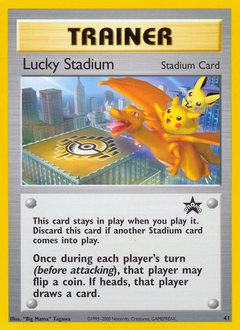
Specific vintage printings carry real premiums, and identifying them is a learnable skill. From the 1999 WOTC era, two marks matter most on Base Set. The 1st Edition stamp is a small circle containing a '1' with the word 'EDITION' beside it, printed just outside the bottom-left corner of the artwork. Shadowless cards have no 1st Edition stamp but also lack the drop shadow that runs down the right side of the artwork box on later prints — they also tend to show brighter colours and a bolder HP font, and they are scarcer than the Unlimited printing that followed. Every 1st Edition Base Set card is shadowless; not every shadowless card is 1st Edition, which is the distinction people most often get backwards. Beyond Base Set, short-print secret rares, staff and prerelease stamps, error cards and limited-distribution promos can all carry value that the rarity symbol gives no hint of.
Old does not mean valuable
This is the single most common misconception, and it is worth stating plainly because it saves a lot of wasted hope. A 1999 Common is a 1999 Common. Age raises value only when it coincides with scarcity, demand and condition, and for most vintage cards it coincides with none of them — the WOTC-era sets were printed in enormous quantities, the cards that survived were mostly played with, and the demand is concentrated on a small number of famous cards rather than spread across the set. The corollary runs the other way too: plenty of cards printed in the last three years are worth far more than most cards printed in 1999, because a modern Special Illustration Rare of a popular Pokémon is genuinely scarce and genuinely wanted. Judge the specific card, not the decade. And be sceptical of anyone quoting a headline price for a card 'like yours' — those numbers almost always attach to graded, near-perfect, 1st Edition copies, which is a different object to the one in your hand.
How to check what a card is actually worth
Once you have read the factors, get a real number, and get it from sold prices rather than asking prices — anyone can list a card for anything, and unsold listings are wishes rather than data. Our card price tool lets you look up any card and see its current market price alongside its set and rarity in one place, which is the fastest way to settle it. Open any card on the site for the same information plus its illustrator and every printing we have. Three habits keep the number honest. Match the exact card, meaning the right set, the right card number and the right variant, because a reverse holo and a plain copy of the same card are different listings. Compare like condition, since a graded price is not a raw price. And ignore the outlier at the top; the middle of the recent sold range is the number you would actually get. Before celebrating a big hit, make sure it is genuine — the fake-spotting guide starts with the texture test, which catches most counterfeits in seconds.
When grading is worth it (usually it is not)
Grading — sending a card to PSA, CGC or BGS to be authenticated, assessed on a 1 to 10 scale and sealed in a slab — is the step people reach for far too early. The maths only works when two things are true at once: the raw card is already worth a meaningful amount, and the gap between its raw price and its graded price is wide enough to cover the fee, shipping both ways and the real risk of coming back a 9 instead of a 10. On modern cards that gap is often thin, because a modern PSA 9 sells for close to raw money, so a near-miss can leave you worse off than not grading at all. Vintage flips the maths, because authentication itself carries value and high-grade survivors are genuinely scarce. Our should-I-grade-it tool runs the numbers on a specific card, and the grading guide walks through the whole decision including the good reasons to grade that have nothing to do with flipping. The default for almost every card is simpler: sleeve it well, which preserves the option to grade later.
What to do with the ones that are not valuable
Most of a collection will be bulk, and bulk still has uses that beat leaving it in a shoebox. It fills a Living Pokédex, where the point is one card per species rather than the best card per species. It builds type pages, colour pages and themed display binders that look far better than a page of mismatched chase cards. It is what you trade with a kid without worrying. And it sells in lots rather than singly — the selling guides cover what percentage is fair for a bulk lot and how to sort for it. The one thing not to do is treat bulk as a disappointment. A collection where every card had to justify itself financially would be a very boring collection.