The quick answer
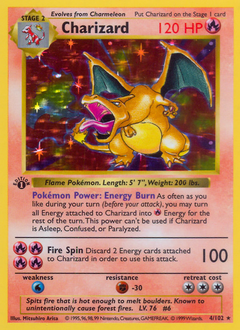
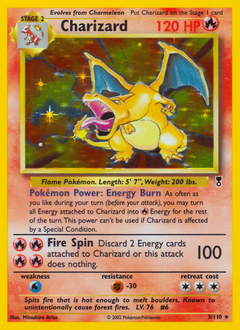
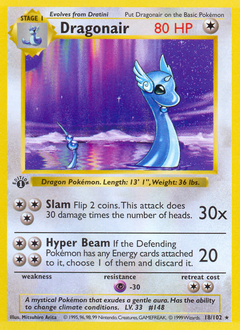
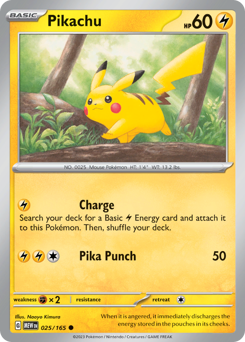
The difference is where the shiny foil sits. On a Holo card, the foil is behind the Pokémon artwork — the picture shimmers while the frame and text box stay flat. On a Reverse Holo it is the opposite: everything shines except the artwork, so the borders, the text box and the background sparkle while the picture itself stays matte. A Non-Holo, sometimes just called a regular card, has no foil anywhere. Tilt the card under a light and it is obvious in a second: if the Pokémon moves, it is a holo; if the frame around the Pokémon moves, it is a reverse holo; if nothing moves, it is neither.
Holo (Holofoil)
A Holo card has a reflective, shimmering finish behind the main artwork. Historically these were the prized Holo Rares — one shiny card per booster pack, the card everyone flipped to the back of the pack to check for. The foil is a large part of what makes vintage holos like the Base Set Charizard iconic, because the foil layer was the visual signal that you had hit something. That changed with the Scarlet & Violet era: every Rare (black star) card now prints holographic by default, and the separate 'Holo Rare' tier no longer exists as its own thing. So on a modern card, 'holo' describes the standard look of a Rare rather than a distinction above it — which is why a modern holo Rare and a 1999 Holo Rare can be worth wildly different amounts despite carrying the same black star.
Reverse Holo (Parallel foil)
A Reverse Holo flips the shine: the artwork prints normally and the rest of the card — frame, text box and background — carries the foil. The official name for the treatment is Parallel foil, and it began with Legendary Collection in 2002, introduced as a replacement for the discontinued 1st Edition print run. The important structural point is that reverse holos exist at almost every rarity: there are reverse-holo Commons, Uncommons and Rares, and a reverse-holo Common is still a Common. The foil is a finish applied to a card, not a rarity above it. That is exactly what makes them appealing to a certain kind of collector, because it means every set has a shadow version of itself — collectors who build 'reverse holo master sets' are chasing every card in the set a second time in its foil variant, which is several times the work of the base set and produces a binder that looks completely different.
How many reverse holos are in a pack?
One per pack was the rule for two decades, from Legendary Collection through the Sword & Shield era. Scarlet & Violet doubled it: modern English packs contain two reverse holos alongside the guaranteed holo Rare or better, which is a meaningful change if you are building a reverse master set — it roughly halves the number of packs the project takes. There is a wrinkle worth knowing when you are opening. In the standard Scarlet & Violet-era pack order, an Illustration Rare or Special Illustration Rare, when you pull one, takes the place of the second reverse-holo slot rather than adding to the pack. So a pack that gave you only one reverse holo is usually a pack that gave you something better instead, which is the opposite of a short-changed pack even though it looks like one at first glance.
The foil patterns, era by era
The foil is not one material — it is a printed pattern under a reflective layer, and the pattern changed with almost every block of the game. Collectors name them, graders note them, and once you know the vocabulary you can date a card by its shine alone. These are the main ones, using the standard names:
- Starlight — Base Set, Jungle and Fossil. Starbursts of varying size scattered across the artwork with a soft, slightly blurry look. This is the foil on the cards that made holos famous.
- Cosmos — Base Set 2 through Call of Legends. Dots and circles of different sizes spread across the image, the pattern responsible for the collectible 'holo swirls' people hunt in vintage cards.
- Tinsel — Black & White through Legendary Treasures. Horizontal stripes across the artwork; Japanese printings also carried foil on the card borders.
- Sheen — XY series onward. Diagonal light refraction. International cards apply it only over the Pokémon image, and in the opposite direction to the Japanese prints, which refract across the whole card from bottom-left to top-right.
- Water Web — Sun & Moon through Cosmic Eclipse. A wavy pattern like flowing water.
- Line — Sword & Shield through Crown Zenith. Thin vertical lines refracting light from the top of the image to the bottom.
- Mirage — the Scarlet & Violet series and the current cards. Similar to Sheen but refracting horizontally rather than diagonally, with silver borders.
- Cracked Ice — Platinum-era theme decks onward. Irregular reflective shapes like shattered glass; a theme-deck and promo pattern rather than a booster one.
- Pixel or Confetti — the McDonald's Collection and Celebrations. Small blocky reflective shapes scattered across the image, like scattered confetti.
Non-Holo
A Non-Holo card has a flat, matte finish with no foil anywhere. Most Commons and Uncommons come this way, and plenty of older Rares were non-holo too — a black star did not always mean shiny, which surprises collectors who started in the last few years. There is nothing wrong with them. They are the bulk of any collection, the backbone of a Living Pokédex, and the cards that make a type-sorted or colour-sorted display page work, because a page of nothing but foil is harder to look at than you would expect. Non-holos are also the easiest cards to keep in perfect condition, since a matte surface hides handling marks that would show instantly on foil.
Telling them apart at a glance
Four checks, in the order that resolves fastest. First, tilt the card under a light source and watch what moves — the Pokémon, the frame, or nothing. Second, look at the border of the artwork box: on a reverse holo the foil stops precisely at the edge of the artwork, which produces a visible hard line that a holo does not have. Third, check the rarity symbol, because it tells you what the card is underneath the finish; a shining card with a black circle is a reverse-holo Common, full stop. Fourth, if the card is from the Scarlet & Violet era or later and you are trying to work out whether a shiny Rare is 'special', remember that it is not — all Rares print holo now. The one case that genuinely confuses people is a full-art or illustration rare, where the foil covers the entire card and the holo/reverse distinction stops applying at all; those are their own rarities and the rarity symbol guide covers them.
Does the finish affect value?
Usually a little, and much less than beginners expect. At the same rarity, holo and reverse-holo versions typically sell for somewhat more than their plain counterparts, because fewer copies exist and they look better. But finish is one factor among five, and it is the weakest of them: the Pokémon, the set, the artwork and the condition all move price far harder. A reverse-holo Common will not be valuable for being foil — most of them are worth a few cents more than the non-holo, which is to say still nothing. The exceptions are worth knowing because they are real. Reverse holos from short-printed or heavily-collected sets can carry a genuine premium, some older sets have reverse variants that are legitimately scarce, and a reverse holo of a chase Pokémon in a popular set can outrun its plain version by a multiple rather than a margin. If you want an actual number rather than a rule of thumb, check the card's recent sold prices; our value guide walks through reading all five factors together.
Why foil cards curl (and what to do about it)
Foil cards curve and matte cards mostly do not, and the reason is structural rather than a defect. A holo card is a foil layer laminated onto paper cardstock, and the two materials respond to humidity differently: paper fibres absorb moisture and swell, the foil layer does not, and the mismatch puts the card under internal stress that resolves as a curve. This is why a binder page of holos can develop a collective bow while the non-holo page beside it stays flat, and why a card that arrived flat can curl a month later in the same room. The practical response is humidity control rather than force. Keep the collection somewhere stable — roughly 35 to 55 percent relative humidity is the range collectors aim for — add a silica gel packet to closed boxes and binders, and store binders standing on their spines rather than stacked, since a stack presses unevenly on whatever is curving underneath. Cards that have already curled will often relax over weeks in a stable environment inside a sleeve; aggressive fixes involving weight, heat or moisture risk creating a crease or a surface mark, which is a permanent problem replacing a temporary one.
Displaying and protecting them
Foil cards show fingerprints and scratch more easily than matte ones, because the reflective surface catches light at exactly the angle that reveals a scuff. Handle holos by the edges, sleeve the ones you care about, and be aware that the damage which most hurts a foil card's grade is surface scratching that a matte card would have shrugged off. In a binder, side-loading 9-pocket pages keep foils flat and scratch-free while letting the shine show, which is exactly why holo and reverse-holo cards make such satisfying display pages — a full page of reverse holos from one set catches light in a way a mixed page never does. If you are building a reverse-holo master set, it is worth housing it in its own binder from the start rather than interleaving it with the base set, both because the pages look better and because it keeps two very different completion projects from tangling.