When the 30th anniversary set releases
The Pokémon TCG’s 30th anniversary set is called Pokémon TCG: 30th Celebration. One product, two names — most people arrive here searching for the anniversary and find the official title only once they get to a retailer listing. It released on September 16, 2026, and it released everywhere at once. The Pokémon Company has confirmed this is the first expansion in the game’s history to get a simultaneous global release, so for the first time there was no window where Japan had the cards and the rest of the world waited on a translation. The date itself is a Wednesday rather than the usual Friday, which is unusual enough that it reads as deliberate. Every launch product listed further down this page carries the same September 16 date; the largest product in the lineup does not arrive until November 6.

Every card is foil, including the Basic Energy
This is the structural change that separates the set from an ordinary expansion, and it is confirmed by The Pokémon Company rather than inferred: every card in 30th Celebration is foil, down to the Basic Energy. There is no non-holo bulk in this set. That is a genuinely different object to collect — but it also has a practical consequence nobody mentions in the announcements, which is that foil cards curl. A foil stock card bends toward its printed face as it reacts to humidity, and a whole set of them will do it together. If you are keeping these, sleeve them as they come out of the pack and get them lying flat in pages rather than stacked loose in a box. An all-foil set is the strongest argument for side-loading pages this hobby has produced in years.
What is actually in a booster pack
This is now settled. Pokémon Center product listings state the contents outright: five foil cards, one foil Basic Energy, and one Pokémon TCG Live code card. That resolves the five-versus-six split you will still see quoted in older coverage, and it resolves it the way the official description implied — five if you count only the cards you would put in a binder, six once the Basic Energy is included. Treat the pack as five collectible cards plus an Energy. The other guarantee is confirmed too: every pack contains one of 30 different Pikachu cards. A Classic Collection reprint can also come out of an ordinary pack, rarely, with no published odds. Packs are almost certainly not being sold on their own. No single-pack product appears anywhere in the lineup, and that lineup is now complete across all three release waves — September, November and December — with the smallest pack-only item still the Booster Bundle of six. Set-guide coverage states it outright: individual packs are not sold at retail, because this is a special set rather than a standard expansion. The Pokémon Company has not published a statement to that effect, so it falls short of confirmed, but there is no longer a gap anywhere in the schedule for a single-pack product to appear in. Plan on buying a sealed product to get packs, and price the set that way.
Thirty Pikachu cards, one guaranteed in every pack
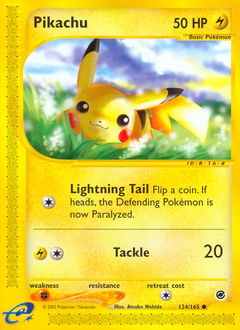
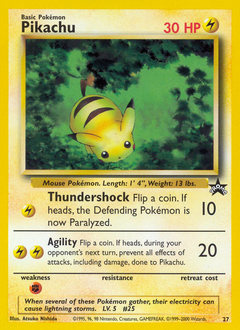
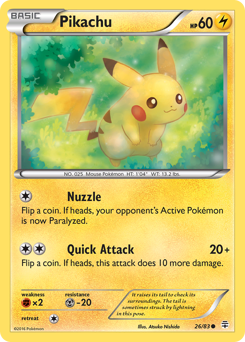
This is the most interesting thing about the set for anyone who builds binder pages, and it is barely being discussed. Thirty unique Pikachu illustrations exist in the set, and every pack contains exactly one of them. The Pokémon Company’s product-lineup announcement confirms each of the thirty is by a different artist, so the subset is thirty illustrators as much as it is thirty cards. That makes the Pikachu subset the rare modern chase that opening can actually complete — a guaranteed drop rate of one per pack against a known pool of thirty, rather than a pull rate you are gambling against. Thirty cards is also almost exactly three full 9-pocket pages with three left over, so a Pikachu master page is a real, finishable project rather than an aspiration. All thirty have now been officially revealed. Three came in June, illustrated by OKACHEKE, Yuu Nishida and Atsuko Nishida — and Atsuko Nishida is the artist who designed Pikachu in the first place, which makes that inclusion the quiet highlight of the first reveal. Nishida Pikachu cards have been appearing for over twenty years already, and this one is numbered 25/30. The fourth was revealed on August 11: Ken Sugimori, the original Pokémon art director, illustrating card 01/30 as a deliberate callback to the Jungle Pikachu. So the numbered run opens with the artist behind the games’ creature art and includes, twenty-four cards later, the artist who designed Pikachu itself. Fifteen more followed through the middle of August across two galleries on The Pokémon Company’s own news site — sowsow, whose Pikachu sits in a pile of cushions holding a Friend Ball, Akira Komayama and Shimaris Yukichi are among the artists named there — and the remaining cards were revealed in early September, closing the subset with a week to spare before release. Those reveals also settled how the thirty are numbered, which matters if you are laying pages out: each card carries two numbers, 01/30 through 30/30 on the card itself and 023 through 052 in the main set run, so the subset sits inside the 128-card checklist rather than beside it. The subset also carries its own holofoil pattern, with the 30th Anniversary logo set behind the card text.
Futuristic rare: Mewtwo and Mew by YOSHIROTTEN
The set debuts a brand-new rarity called Futuristic rare, and the first two cards to carry it are Mewtwo and Mew illustrated by the Japanese artist YOSHIROTTEN. Both facts are official. What is worth knowing before you form an opinion from a screenshot is that YOSHIROTTEN is a graphic artist rather than a career card illustrator — no card in our database of 20,479 cards across 174 sets carries his name — and his style is chrome, iridescent and deliberately synthetic, which is not what a Pokémon card usually looks like. The reveal split collectors sharply, and the criticism has been blunt: the flat renders drew comparisons to low-effort CGI and counterfeits. The defence is more interesting than the attack, though. A flat scan cannot show texture, and this is a rarity whose entire point appears to be texture. The community also has a long track record here — several recent headline cards were mocked at reveal and hunted after release — so the honest position is that nobody can judge these until they are in hand under a light. That is no longer only an argument from the sidelines. In mid-August The Pokémon Company and Creatures published a video interview with YOSHIROTTEN and Creatures art director Satoru Nagaya in which he describes light as the thing the illustrations are built around, and which shows the Mewtwo ex, Mew ex and Basic Energy cards moving under a light rather than as flat scans. The same interview confirms two things this page had not stated: the foil Basic Energy is his work too and shares the Futuristic rare style, and so is the key visual for the expansion as a whole. His work in the set does not stop there, and what else it covers is the sharpest example on this page of the gap between confirmed and reported. From September 12, as early retail product reached shelves, three more Mew started coming out of packs — cards that appear in no official gallery and in no checklist booklet: a red, a green and a blue Mew, numbered R/RGB, G/RGB and B/RGB after the original Game Boy releases. They exist, and they turned up in Pokémon TCG Live’s card data on September 15. What has not happened is an announcement. The Pokémon Company has not acknowledged them, and there is precedent for that silence running for months, because secret rares have been held back until a later set before. No pull rate has been published for them, and the very long odds quoted for them are unverified. Treat the three cards as real and every claim about how rare they are as unconfirmed.
The Classic Collection: old cards you can suddenly afford
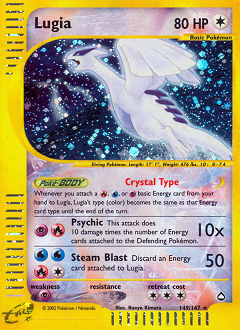
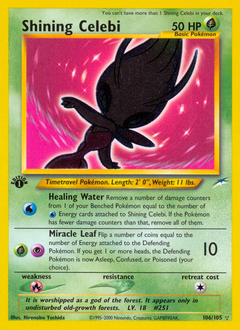
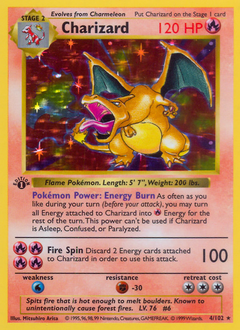
The set brings back classic cards from across the game’s history, in the mould of the 25th anniversary Celebrations. The Pokémon Company’s product-lineup announcement puts the number at exactly 30 returning cards, so the count is no longer an estimate. Five of the 30 were named one at a time, and then the rest arrived together. The Pokémon Company’s announcement pages list Charizard from Base Set and Pikachu & Zekrom-GX from Sun & Moon—Team Up, and on August 27 official English card images added three more: Crystal Lugia from Aquapolis, Dark Tyranitar from EX Team Rocket Returns, and the Magikarp illustration rare from Paldea Evolved. Crystal Lugia is the one that matters most to this page, because it was the reprint this section had listed as hoped for and it is now settled. The other 25 are no longer open either. The card list the official Japanese 30th anniversary site published on September 9 carries the Classic Collection in full, as cards 136 through 165 of that release, with names and illustrators — so all thirty reprints are officially named rather than five. A complete lineup had been circulating since June, when the same site flashed all thirty cards through a short animation; what changed is that it is now published as a list rather than glimpsed in a video. The English printing numbers the subset differently and The Pokémon Company International has still not issued an English checklist, but the thirty cards themselves are settled: the three added by official English images on August 27 all appear in the Japanese block, which is what ties the two releases to the same subset. One official detail to plan around: the reprints are not legal in the Standard format, though they can be played in formats that allow the original printings. A reprint is a legitimately different card — the official card images show a 30th anniversary Pikachu stamp and a gold border on modern foil stock — so it does not replace the original, but it does put the artwork in your binder for the price of a pack instead of the price of a car. The Crystal Lugia image makes that concrete in a way the announcements did not: the English reprint is not a straight copy of the 2003 card. The Crystal Type line has been centred, the e-Reader logo is gone, and the spacing and fonts differ. The three cards below are the originals, priced as they stand today. All three are now confirmed to have a reprint in the subset, Shining Celebi included — it was the last one this page still hedged on. The prices are what the originals cost, which is the whole story of an anniversary set: the reprint puts the artwork in a binder, not the card.
The new cards: illustration rares and two new ex
Away from the anniversary gimmicks there is an ordinary expansion in here, and by early reveals a strong one. The Pokémon Company has named Lapras, Drifloon, Zorua and Lycanroc as illustration rares, with Espeon and Umbreon also appearing, and Greninja and Sylveon arriving as brand-new Pokémon ex. Official product copy also names Salamence ex among the set’s ex cards, alongside Mewtwo ex, Mew ex and Umbreon ex. Early community reaction has been consistent on this point in a way it has not been about the Mewtwo and Mew: the illustration rares are the best thing in the set. Drifloon set at an amusement park has drawn particular attention, which is a fittingly grim joke if you know what Drifloon is supposed to do with children at amusement parks. Zorua is worth watching for a different reason — its recent illustration rares already trade between roughly $27 and $48, so it is a species with a demonstrated following before this set adds to it. The Kanto legendary birds have since been revealed as well. Articuno, Zapdos and Moltres are all 120 HP, all illustrated by HYOGONOSUKE, and they are built to be played as a trio: their attacks — Frosty Flapping, Flash-Pop Flapping and Fiery Flapping — each let you attach a Basic Energy from your hand for free once all three are in play together. Their numbering is also the first hard evidence of how big the set is. Moltres is 11/128, Articuno 18/128 and Zapdos 55/128, so the main numbered run is 128 cards, with secret rares above that. The thirty Pikachu sit inside that run at 023 through 052 while carrying a second 01/30 to 30/30 numbering of their own; the Classic Collection is numbered separately from the main set. Lugia and Ho-Oh, revealed on August 19, sit inside that run at 121 and 012 — Lugia illustrated by Kazuki Minami over a moonlit ocean, Ho-Oh by Anesaki Dynamic in daylight — both at regular rarity, with nothing said about whether either also appears as an illustration rare. The two Pikachu ex are the other pair to know: Day and Night, both 190 HP, both illustrated by kantaro, revealed in August as special illustration rares numbered 149 and 150. Reveals have moved quickly since. Official English previews now cover about 167 cards and have run past 158/128, and the secret rares above the main run are confirmed as alternate arts of Lapras, Drifloon, Lycanroc, Meowth, Alolan Meowth, Hisuian Zorua and both Pikachu ex. What was still missing a week ago was a set list, and that has now partly arrived. On September 9 the official Japanese 30th anniversary site published the expansion’s card list — the first official checklist for this set in any language, and the end of a long stretch in which every list in circulation had been compiled from previews. It covers the Japanese release rather than this one, and the two are not the same size: the Japanese main run is 103 cards, because the English set merges Japan’s 30th Celebration with a second Japanese product. So a full English checklist stayed the piece missing. The Pokémon Company’s own TCG site does host an official English card gallery for the expansion, and that is the first-party place to look the English cards up, but a gallery of card images is not a numbered checklist and it states no total. Coverage compiling the English cards puts the full set at 199 — a 128-card main run, 33 secret rares, the 30 Classic Collection reprints and eight Basic Energy — but that total is still reported rather than confirmed: The Pokémon Company International has published the cards without publishing a count. No pull rates have been published for any region.
Every product, and when it lands
Thirteen products, spread across three dates. Every one announced so far, and what it holds:
- Elite Trainer Box, September 16. Nine packs, a Nidorina promo, 65 sleeves, 16 foil Basic Energy, dice, a coin and six dividers.
- Pokémon Center Elite Trainer Box, September 16. Eleven packs and two Nidorina promos, one of them stamped.
- Booster Bundle, September 16. Six packs and nothing else, the smallest pack-only product in the range.
- Poster Collection, September 16. Three packs, Articuno, Zapdos and Moltres promos, and a double-sided poster showing over 160 cards.
- Tech Sticker Collection, September 16. Three packs and an Alolan Exeggutor or Lucario promo.
- Pokémon ex Box, September 16. Four packs, an oversize card, and either Sylveon ex or Greninja ex.
- Knock Out Collection, September 16. Two packs, a foil Eevee promo and a commemorative coin.
- Battle Decks, September 16. Built around Espeon ex and Umbreon ex.
- Ultra-Premium Collections, November 6. Day on Espeon ex, Night on Umbreon ex. Each holds a Pikachu ex promo illustrated by YOSHIROTTEN, a playmat, sleeves, a deck box, and 30 packs: 29 regular and one Classic Collection pack of three cards.
- Ditto Premium Collection, November 6. Eight packs, an acrylic display and a Ditto promo, with no ex card attached.
- Mewtwo and Mew Figure Collections, November 6. Five packs each, a sculpted figure, a foil promo and an oversize card.
- Pokémon ex Tin, December 4. Four packs and one promo, Sylveon ex or Greninja ex.
That Classic Collection pack in the Ultra-Premium is the only guaranteed source of the reprints, but it is no longer the only source at all: they turn up in ordinary 30th Celebration packs too, rarely, and no pull rate has been published. Note also how the lineup is weighted. The products with the highest pack counts do not arrive until November and December, so the set keeps landing as new product for months after the September rush. The November and December entries come from retailer and press listings rather than a Pokémon Company announcement page, so treat the December tin as the least settled item on this page.
Do the reprints hurt the cards they reprint?
This gets asked every anniversary and the historical answer has been no. When the 25th anniversary reprinted a set of grails, the originals did not fall — the most-cited case is Umbreon Gold Star, which saw essentially no drop after its reprint — and some argue the attention pushed originals up instead. The reasoning is straightforward: a stamped reprint on modern stock is a different card to a twenty-year-old original, the absolute scarcity of the original is untouched, and the people buying at that level are not treating the two as substitutes. There is one genuine caveat, which is that reprinting a card from three years ago is not the same as reprinting one from twenty. A recent card reprinted while its original run is still fresh in everyone’s memory has a much better claim to being a substitute, and at least some collectors have said they would simply take the reprint. If you are holding a modern chase that gets reprinted here, that is the case to watch.
What to actually do on release day
Expect this to be difficult to buy at list price. Every recent anniversary or nostalgia set has been cleared by bots and resellers within minutes, and this one launched worldwide on a single day, which concentrated the rush rather than staggering it across regions. Three things follow from that. Buy from a retailer you have used before and be willing to wait for a restock rather than chasing a launch-week shelf, because that shelf is already empty. Do not pay a reseller premium in the first fortnight — anniversary sets are printed heavily, the Ultra-Premium Collections do not arrive until November 6 and a third wave follows in December, so supply gets better from here rather than worse. And if you want specific cards rather than the experience of opening packs, buy them as singles once the market settles, which for a set this size will be far cheaper than opening your way to them. Our where-to-buy guide covers the mechanics of that.
The binder plan, if you are collecting it
Three pages of Pikachu is the obvious backbone and the only part of this set you can reliably finish by opening, so start there and let the guaranteed drop do the work. Give the Classic Collection reprints their own run of pages rather than filing them by number, because they are a set-within-a-set and they read as one when they sit together. Keep the Futuristic rares out of the general run and give them a facing pair — whatever you make of the artwork, a chrome card in a row of ordinary foils is going to fight with its neighbours. And because everything in this set is foil, buy more pages than you think you need and get them into a binder quickly rather than leaving a stack of curling holos on a desk until December.