Start by deciding what you are actually buying
Almost every "where do I buy Pokémon cards" problem is one mismatch: you want cards, and you are shopping for packs. Those are two different purchases with two different addresses. A sealed pack is a lottery ticket with good art on the wrapper — you are paying for the reveal, and the card you actually wanted is a small chance inside it. A single is that card, in your hands, at a price you agreed to before you paid. Both are legitimate things to buy. But sort out which one you are after before you start hunting, because half the venues below are excellent at one and useless at the other.

The shelves are not as empty as they look
Most big-box stores moved Pokémon product off the pegs and behind the customer service desk or the register. That is theft and crowd control, not a sold-out sign — and it is entirely possible to spend months believing your local Target has nothing because you only ever checked the aisle. Ask at the counter. While you are there, ask which day the truck comes and roughly when cards go out; staff will usually just tell you, and stocking day plus the following morning is most of the trick to buying at retail price. Availability is intensely local. Inside one metro, one store can be cleared at open every week while another three miles away leaves product sitting for days. There is no national answer here, only your five or six stores and their individual rhythms.
Official vending machines are the best shot at retail price
The Pokémon vending machines in grocery stores are the most reliable retail-price source in the current market, and they are built that way on purpose: rather than hold a full load one person can clear, they release stock on a timer through the day. The pattern is fixed against the hour — a machine that drops at :11 drops again at :41, then :11, all day long. That is the whole mechanic, and it is the reason a machine that reads "sold out" at 2pm is worth another tap at 2:15. Pokémon runs an official machine map at vending.pokemon.com, which beats driving around at random — check it before you go hunting, because coverage is regional and some states have almost none. Two cautions: the regulars in your area already know the timing, so expect company at the machine, and unofficial card machines exist that look similar and price at market rather than MSRP. Check the branding before you assume you are paying retail.
The stores nobody thinks to check
Dollar General, Family Dollar, CVS and Walgreens are the most consistently overlooked stops, and they are often the ones still holding stock at 4pm. Expect single packs, blisters and tins rather than boxes, usually kept behind the counter, and check the price before you assume retail — drugstores mark cards up more often than dollar stores do. Best Buy runs the most orderly operation of the big boxes: purchase limits, product held at customer service, and a public stock tracker; the cost is a physical line, sometimes a couple of hours before open on a release day. Target and Walmart still get product and both now cap quantities, which helps, but they sell through at or near open on restock days. Then there is the long tail of stores that sell cards without being card stores — Meijer, Barnes & Noble, Kohl’s, Menards, Hot Topic, Miniso, hardware stores, grocery chains, gas stations. These usually price above MSRP but below market, which is exactly why product sits there long enough for a normal person to walk in and find it.
Online drops, and the honest odds
Pokémon Center’s own drops are the correct answer and the hardest to win — make the account and turn on notifications well in advance, because the window is measured in seconds. Target’s online restocks tend to land overnight, roughly midnight to 3am Eastern, and Walmart’s have run Wednesday evenings Pacific. Both are effectively a bot contest; treat a manual attempt as a lottery ticket rather than a plan. Alerts are how informed buyers hear about any of it: restock Discords, stock-alert accounts, and local Facebook groups. The local groups are the best signal by a distance — hyper-specific, with photos of what is actually on a shelf and the exact minute the neighborhood machine cycles. One thing worth knowing before you join anything paid: a good deal of the alert ecosystem also runs or tolerates automated checkout, which is the thing making retail hard in the first place. A free community group is a much easier thing to feel good about.
Card shops and card shows
Local card shops run the full range from best option in town to worst. Some price sealed at or near MSRP and deliberately keep it affordable for kids; others price everything at market and function as scalpers with a lease. You will only learn which is which by walking in and asking. One pattern holds up: the store that is not primarily a card store — the comic shop, the board game café — often has the smallest inventory and the best prices, because cards are not its margin. Card shows are the underrated option, especially with a kid. You get binders of singles to flip through, prices you can negotiate, bulk discounts if you ask for them, and vendors who will frequently hand a kid a free card at their first show. Look for the tables that are mostly singles rather than a wall of sealed boxes. TCDB publishes a card show calendar you can filter by state.
The math that ends the argument: singles are cheaper
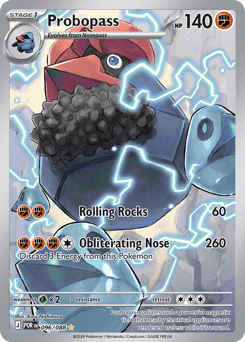
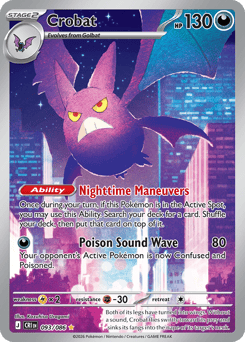
Here is the part that should change how you shop. Illustration rares — the full-scene art cards that are the reason most people are chasing packs at all — are routinely cheaper than the pack they would come out of. Across the six sets of the current Mega Evolution era, 41% of illustration rares cost less than the $4.49 list price of one booster pack, and the cheapest sit under a dollar. Fifty dollars spent at that end of the list buys around twenty of them. Meanwhile a 36-pack booster box runs $220–250 at market, which is $6–7 a pack, and a box guarantees you no specific card at all. Buy the illustration rares you want directly and you can own every one in a set for less than the box costs — no pulls, no line, no luck. Card prices move, so treat those figures as the shape of the market rather than a quote.


Buying singles without giving it all back in shipping
TCGplayer is the default venue for singles, with eBay as the main alternative and its buyer protection as the reason to use it. Shipping is where a cheap singles order quietly stops being cheap, so buy with it in mind. Plenty of sellers ship free over a threshold, and the thresholds vary enormously — free over $50 is common, but the sellers who go free at $5 are the ones worth hunting for, because that is where a $6 card genuinely costs $6. Consolidate wherever you can: pulling four wanted cards from one seller instead of four beats any per-card saving you were chasing. And a courtesy point that matters more than it sounds. A lot of these sellers are one person with a printer and a stack of penny sleeves. A five-dollar order made of forty ten-cent commons can eat half the sale in postage, materials and handling time. If you want volume, buy bulk as a lot from someone selling lots, and keep the individual-card orders for cards worth the handling.
Make your own booster packs
If the thing you are actually buying is the reveal — for a kid, it usually is — you can build that experience yourself, better and cheaper than the market will sell it to you. Every part is cheap. Bulk commons and holos run about ten cards for a dollar out of the box on a shop counter, and lots of fifty run $5–10 online; skip the 500-card mega-lots, which are repeats and filler. Illustration rares, as above, run $1–5. So a homemade pack of eight or nine bulk cards with an illustration rare at the bottom lands around $3–5 — roughly what a real pack costs — except the good card is guaranteed. That guarantee is the design decision, and it is worth thinking about rather than defaulting. Every pack a hit is the obvious build for a five-year-old, and it is a good one. But a run where every pack hits goes flat fast, because the reason opening is fun at all is that it is not certain. Salting the good cards across one pack in three keeps the tension and stretches the same budget over more openings. Either way you are doing deliberately what the mystery repacks at a drugstore checkout only pretend to do — the difference being that you know exactly what went in, and you stacked it in the kid’s favor instead of your own.


The repacks at the checkout are the one thing to skip
Commercial repacks are the worst value on this entire list — the blister of mystery cards hanging by a drugstore register, the mystery box on a marketplace, the "100 cards, guaranteed holo" lot. They are priced against the fantasy of what might be inside and filled against the seller’s margin, and the two are not related. The same caution applies to sealed product from unfamiliar sellers: resealing is common enough on third-party marketplace listings that the safe rule online is to buy sealed only when the retailer itself is the seller rather than a storefront operating inside it. Check who a listing actually ships from and is sold by. Be equally wary of storefronts you have never heard of that surface in search results or social ads, and of loose packs pulled from a booster box someone opened to sell individually at a markup.
Japanese and Chinese product is cheaper and easier to get
If you want to open packs and English sealed is simply unobtainable where you live, look sideways. Japanese product is easier to find, costs less per pack, prints beautifully, and — the important part — publishes guaranteed hit rates, so a box has a floor an English box does not. Japanese singles are also dramatically cheaper for the same headline card of a set, and Japanese cards are generally held to grade well, which compresses the premium a high grade carries. Simplified Chinese product is cheaper again and carries its own exclusives. The risk in this lane is counterfeits, and it concentrates in marketplace listings for sealed boxes rather than in the product itself. Buy from an established importer or a shop that specializes in it instead of an anonymous listing and you sidestep most of it. If you are not sure what you are looking at, our fake-card guide covers the tells.
Buy the set nobody is hyping
Nearly every availability problem in this hobby is a hype problem, and hype is set-specific. The set the internet has decided is boring is the one still sitting on a shelf at MSRP weeks after release, still winnable in an online drop, and cheapest in singles. It is also the set where a $4.49 pack actually costs $4.49. Buying for a kid, this is close to a cheat code: an eight-year-old has no idea which set the market rates, and the reveal feels identical either way. It is not an accident that the cheap illustration rares above come from sets that were treated as quiet at release.
What we would do with fifty dollars
Concretely, and assuming you want cards rather than a morning in a parking lot: thirty dollars on six to ten illustration rares you genuinely like the look of, pulled from one or two sellers to keep shipping down. Ten on a bulk lot, either as filler for homemade packs or just as a pile to hand a kid and let them sort. Ten on somewhere to put it all — a zip binder and a few pages, so the cards do not end up in a shoebox with bent corners. That gets you more of the cards you actually wanted than fifty dollars of sealed would produce in a good week, and it skips the 6am line entirely. If the hunt itself is the fun part, and for plenty of people it honestly is, run the vending machines on top of that plan rather than instead of it.