Sleeve everything (it’s the cheapest protection there is)
Before a card goes into a binder, a deck, or a box, it should be in a sleeve. An unsleeved card rubs against pocket plastic, picks up fingerprints, and dings its corners every time it's handled. Sleeves cost pennies and prevent the kind of wear that quietly knocks a card down a grade. The only real question is which type — and that depends entirely on what the card is doing. Get that match wrong and you either overspend on a card that never leaves a page, or underprotect one you shuffle every week.
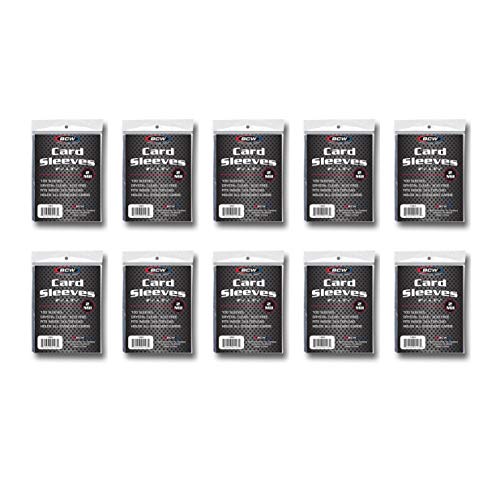
The three sleeve types, and when to use each
There are three jobs, three sleeves, and beginners constantly conflate them. Penny sleeves are thin, cheap, soft sleeves for bulk, shipping, and going inside a toploader — they fit loose, so they're not for shuffling or for binder security on their own. Perfect-fit sleeves (also called inner or exact-fit sleeves) are snug and near-invisible, sized to the card itself — ideal for binder display and as the inner half of a double-sleeve. Premium deck sleeves, the thick matte ones you shuffle with, have opaque backs and hold up to play. The classic mistake is buying loose penny sleeves and expecting deck-grade protection; match the tier to the job instead.
Best penny sleeves for binders and storage
For plain storage and binder pockets, fit is everything, and the brands separate quickly. Vault X penny sleeves earn the most praise as the best all-around binder fit — a middle ground that's snug without being tight enough to worry about edges. BCW is the reliable budget pick: cheap, consistent, never spectacular but never a problem. Ultra Pro's standard penny sleeves are the ones to be careful with — they run tall and loose for Pokémon, so cards slide and the tops crinkle in pages (their separate Premium penny line is cut better and fits fine). A few collectors actually prefer that looseness because it's gentler on card edges going in, so it's partly personal — but for retention in a pocket, snugger wins.
Perfect-fit (inner) sleeves for a clean look
Perfect-fit sleeves are sized so precisely that a sleeved card looks almost bare — which is exactly why collectors reach for them on display cards and as the inner layer when double-sleeving. KMC Perfect Fit is the standout here, cheap and easy to load into binders, slabs, and one-touch cases; plenty of collectors have used them for years and won't switch. The tradeoff is real, though: because the sleeved card is no bigger than a bare one, perfect-fits can slide around in binder pockets, and they're tight enough that you have to seat cards carefully to avoid catching a corner. Textured secret rares fit especially snugly — if one resists, don't force it.
Premium deck sleeves for shuffling and play
These are for cards you actually shuffle — not binder cards, which sit still and need none of this stress protection, so save the thick textured sleeves for your playables. Dragon Shield is the sensible default: durable, opaque-backed, a huge color range, and stocked in nearly every card shop, with Matte and Dual Matte the go-to lines. Ultimate Guard Katana has the best shuffle feel of anything, often called buttery, but it's frequently hard to find and wears out faster, so treat it as a connoisseur's pick you'll resleeve sooner. Gamegenic Matte is a strong value everyday sleeve that resists gunk and glare, though the pricier Prime line divides players. Ultra Pro's Eclipse and Pro-Matte are solid, thinner options, distinct from Ultra Pro's loose penny sleeves.
A note on quality control (inspect every box)
The single most consistent complaint across premium brands isn't design, it's batch-to-batch quality. Even Dragon Shield has drawn criticism in recent years for miscut sleeves, rough edges, and corners that dent quickly, with the metallic-fleck colors reported to ding faster than plain ones — plenty of collectors still get years of trouble-free use, but the point stands: inspect a fresh box before you sleeve a deck for a tournament, since a marked or miscut sleeve can cost you a match. This is brand-agnostic advice. Watch toploaders too — some ship with tiny plastic shavings inside from manufacturing, so check and wipe them out before inserting a card.
Sizing: Pokémon is standard, but sleeves aren’t
Pokémon cards are standard trading-card size, yet many sleeves labeled for standard cards run noticeably too tall — Ultra Pro's especially — and that extra length is what causes the sliding and top-crinkling in binders. Fit genuinely varies brand to brand, and sometimes pocket to pocket within one binder thanks to QC. There's also a size trap worth flagging: some sleeves are Japanese-size (smaller), including many official Pokémon Center sleeves and certain KMC lines, and they won't fit English cards. Check the size, not just the brand, before you buy in bulk. When in doubt, order a small pack and test the fit before committing to a thousand.
Best sleeves for binder display
Binder storage has different priorities than a deck: you want a snug fit so cards don't shift, near-invisibility so the holo and texture show, and — if you might grade or sell — a clear back so the card is readable without unsleeving. That points to perfect-fits (KMC Perfect Fit, Vault X Exact Fit) or clear, non-glare deck sleeves like Dragon Shield Classic Clear, which add rigidity a floppy penny sleeve lacks and help cards load into side-loading pockets. The one thing to avoid for display: the free sleeves that come in Elite Trainer Boxes have a frosted clear side that fogs holo and dulls color, making secret rares look flat. Fine as free bulk sleeves; not for the cards you want to show off.
Matte backs vs. matte fronts (don’t confuse them)
There's a common mix-up worth clearing: people assume premium matte sleeves fog cards the way ETB sleeves do. They don't. On a Dragon Shield matte or non-glare sleeve, the matte finish is on the BACK, for shuffle grip, while the front over the card face stays clear. ETB sleeves are the opposite — matte on the clear front — which is exactly why they dull the art. So a matte-clear or non-glare deck sleeve is a great binder-display choice and is often described as a sturdier version of an ETB sleeve, while the ETB sleeve itself belongs in storage. Read which side the matte is on before you judge a sleeve on the word alone.
Official and art sleeves are fragile — oversleeve them
Official Pokémon Center and ETB art sleeves are lovely, but they protect poorly. The outer film tends to turn sticky and tear after only a few games, and there's a real chance they micro-mark card edges over time — the kind of wear graders notice. For sanctioned play the rules matter too: non-solid-color art sleeves generally have to be official Pokémon sleeves, which is why players pair them with plain outers. If you want to actually use a special sleeve, slip it under a clear-matte Dragon Shield oversleeve so the art still shows while the tough outer takes the abuse. Otherwise, treat art sleeves as display pieces and keep them off the play table entirely.
How to double-sleeve (step by step)
Double-sleeving fully seals a valuable card against dust, moisture, and shuffle wear. The step that trips people up is that the inner perfect-fit sleeve goes on UPSIDE-DOWN. The canonical combo is a KMC Perfect Fit inner with a Dragon Shield matte outer:
- Load the card into the perfect-fit sleeve upside-down, so its open end sits at the BOTTOM of the card — the opposite end from where the outer sleeve opens.
- Slide that into a standard penny or deck sleeve, which opens at the top.
- Check that the two openings now sit on opposite edges. The card is sealed on all four sides, and the outer sleeve absorbs any handling.
- Use a clear inner sleeve if you might ever grade or sell, so the back of the card stays readable without taking it apart.
Is double-sleeving worth it?
For a genuinely valuable card, yes — it's the most protection you can give without a slab, and the snug inner sleeve also helps flatten the foil curl that afflicts modern holos. But it isn't free. Two layers of plastic add a little haze, so a card can look slightly cloudier than under a single clear sleeve, and it adds bulk — a fully double-sleeved deck gets thick. Squeeze the trapped air out as you seat the inner into the outer, or you'll fight bubbles. For bulk and mid-value cards, a single good sleeve is plenty; save double-sleeving for the pieces you'd truly hate to damage.
Sleeves are consumable — and the quick picks
Even the best sleeves wear out: corners ding, surfaces cloud, and shuffle feel turns sticky, so pick something available and cheap enough that resleeving isn't painful, and swap played decks before big events. The quick picks:
- Binder display: perfect-fits (KMC Perfect Fit, Vault X Exact Fit), or Dragon Shield Classic Clear if you want more rigidity.
- A valuable single: double-sleeve it — perfect-fit inner plus a penny or Dragon Shield outer — then into a toploader or one-touch.
- Bulk and shipping: cheap penny sleeves, BCW or Vault X.
- Decks you play: premium matte sleeves, Dragon Shield, Katana or Gamegenic.
- Whatever you choose: sleeve the card before it touches a page, and for the ones you'd hate to scratch, double-sleeve.


