The one rule: buy the thing they’d never buy themselves
A collector picks their own cards. They are chasing one specific Charizard, or an illustrator’s Pikachu, or the last four slots of a set — and a booster pack grabbed at the register advances none of it. What they do not buy is the boring infrastructure. Sleeves run out and get replaced with whatever is closest. Pages get stuffed past capacity because a fresh box of them feels like spending money on nothing. A binder stays in service two years past the point its rings started biting cards. That deferred, unglamorous gear is the gift that lands, because it improves every card they already own instead of adding one more. If you remember one line from this page: buy the storage, not the cards.

If they already collect: gear, in this order
Start with the binder, because it is the thing they touch every time they sit down with the collection. A side-loading, ringless zip binder in the $25–35 range is the safe default — side-loading pockets mean nothing slides out when the binder is held sideways, and no rings means no ring dents on the cards nearest the spine. Never gift a ring binder to save money; it is the one piece of gear that can actively damage a collection. After the binder: a 50-pack of side-loading 9-pocket pages, a 1,000-count box of penny sleeves, and a combo of toploaders with sleeves for the thick or valuable cards. If you want the gift to feel like a gift rather than supplies, a one-touch magnetic holder turns one card they already love into a shelf display — that is the cheapest way to make a $20 present feel personal.
Sleeves are where gift-buyers go wrong
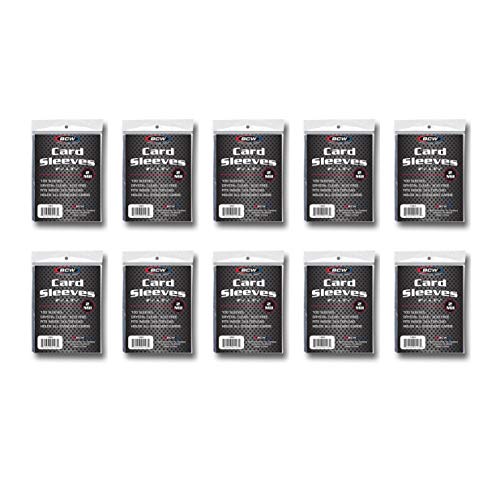
Sleeves come in three tiers that look identical in a product listing and are not interchangeable. Penny sleeves are thin, loose, and cheap — the right thing for bulk, for shipping, and for going inside a binder pocket. Perfect-fit or inner sleeves are snug and nearly invisible, used alone in a binder or as the inner layer of a double-sleeve. Premium play sleeves are thick with opaque backs and exist for shuffling a deck. Buying premium sleeves for someone who only binders means paying several times over for the wrong product; buying penny sleeves for someone who plays gets them a box that will not shuffle. Work out which one they actually do first. On brands: Vault X pennies fit binder pockets best, BCW is the dependable budget box, and Ultra Pro’s standard pennies run loose enough that cards can work their way up out of a pocket — though a looser sleeve is also gentler on card edges going in, which is why the fit question has two defensible answers.
If they’re just starting: the whole setup is about $40
For someone with a shoebox or a rubber-banded stack, the complete first setup is a binder, one pack of pages, and a box of penny sleeves — roughly $40 together, and it converts a pile into a collection in an afternoon. That is a better gift than $40 of packs, and it is the gift that keeps the packs they open next year from ending up in another shoebox. If the recipient is a kid, buy the same three things but expect the binder to take abuse: our guide on collecting with kids lays out the two-binder system that keeps the good cards out of a backpack.
Sealed product: what’s on shelves for the 2026 holidays
If you are set on buying something sealed, the season has a clear headliner. The 30th Celebration set lands September 16, 2026 — the first simultaneous worldwide Pokémon TCG release, with all-foil packs and a new shimmering rarity previewed on Pikachu, Mew, and Mewtwo. Delta Reign, the Mega Rayquaza ex set, is reported for November 6. The safest sealed gift in any year, though, is an Elite Trainer Box: around $50 at MSRP for roughly nine booster packs plus sleeves, dice, and a lidded box people actually keep and reuse. One warning that matters more in December than any other month — buy sealed product at a big-box retailer at MSRP. A hot set in the second week of December costs double on the resale market, and the markup buys the recipient nothing extra.
The Holiday Calendar is the easiest $50 in the hobby
The Pokémon TCG Holiday Calendar is 25 numbered doors — a booster, a three-card fun pack, a festive-stamped foil, a coin, a sticker sheet — opened one a day through December. It is $49.99 at MSRP, it is the rare Pokémon gift that lasts a month instead of ninety seconds, and it works equally well for a six-year-old and a thirty-year-old. The catch is timing: it releases in late August, three months before anyone opens door one, and the price drifts upward as December approaches. Our full breakdown covers what came in the last three editions and whether the math holds up.
Four gifts to skip
One: mystery boxes and "guaranteed hit" repacks. The seller sets what goes in and salts the hits at a rate that keeps the operation profitable — you are buying their margin. Two: marketplace lots promising "100 cards including rares." Every pack has a rare, so the guarantee is meaningless, and unbranded bulk lots are where counterfeits circulate. Three: gold-plated or metal novelty "cards." They are not tournament-legal, not printed by The Pokémon Company, and have no collector market. Four: a graded slab bought because it looked impressive. Grading premiums attach to specific card-and-grade combinations, so unless the collector has actually named the card, a $150 slab is $150 of someone else’s taste. If a lot or a slab still tempts you, read our guides on spotting fakes and on whether grading is worth it first.
Gifts that aren’t products
The best Pokémon gifts are often not purchases at all. Print a set of binder dividers and a set checklist from our printables and put them in the binder you are giving — it costs ink and looks like you understood the hobby. Buy a single card by their favorite illustrator rather than a random one of their favorite Pokémon; artist pages make that a five-minute job and the card arrives with a story attached. Or build the page yourself: nine cards on a theme, sleeved and slotted, handed over finished. And the honest fallback that never disappoints — a fixed budget at a card shop or marketplace with the rule that they pick. Collectors would rather choose than be surprised, and everyone knows it.
Quick picks by budget
If you already know the budget and just want the answer, find your number here:
- Under $15: a 1,000-count box of penny sleeves, or a single card of a Pokémon they actually like.
- Under $30: 50 side-loading 9-pocket pages, a toploader-and-sleeve combo, or a zip binder if you catch one on sale.
- Around $50: the zip binder, an Elite Trainer Box, or the Holiday Calendar. This is the sweet spot where a Pokémon gift stops feeling token.
- $75–100: the whole starter setup (binder, pages, sleeves) with a pack or two on top, or a one-touch display plus the card to put in it.
- $150 and up: a specific graded card they have named out loud, or a sealed booster box — but only if you know they open product, because plenty of collectors buy singles and would rather have had the equivalent in cards they chose.