Great art and high prices have almost nothing to do with each other
This is the single most useful thing to understand about collecting Pokémon art, and it is counterintuitive enough that most people take a year to notice it. What a card costs is set by how many people want that specific Pokémon, whether a content creator held it up on camera, and whether it happens to be from Kanto. What a card looks like barely enters into it. The consequence is that a genuinely beautiful, technically ambitious illustration by a well-known artist can sit at three dollars indefinitely, in the same set where a mediocre one goes for two hundred because it has a Charizard on it. If you collect for the art, the market is quietly handing you a discount, and this page is a list of places to take it.
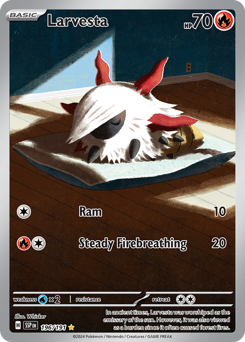
The 20 picks, under $10
Edition 1 · picked Aug 2026 · prices update automatically, so what you see is today's, not the day we wrote it.

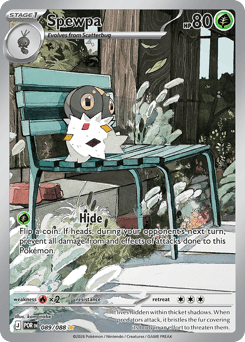

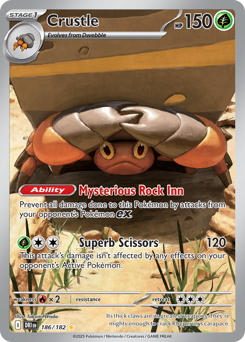

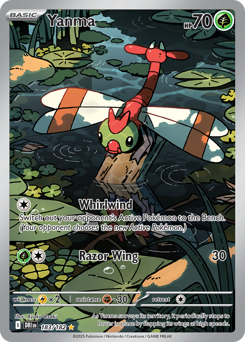
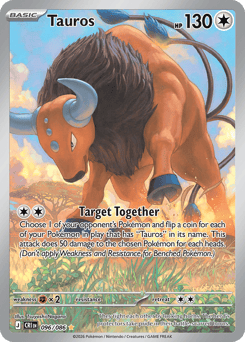

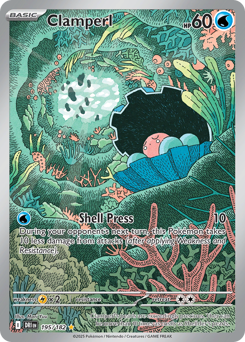
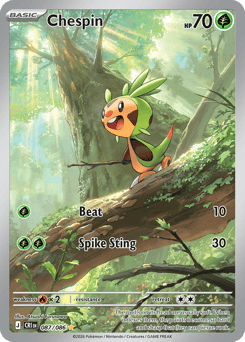
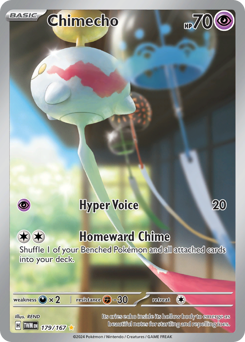
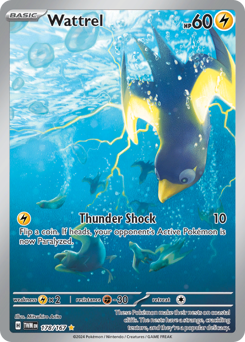

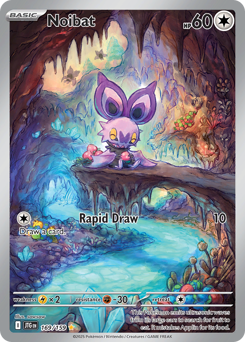
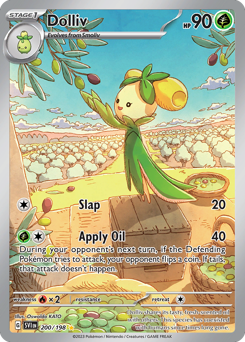
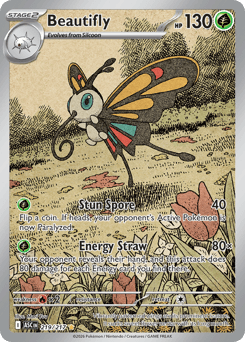
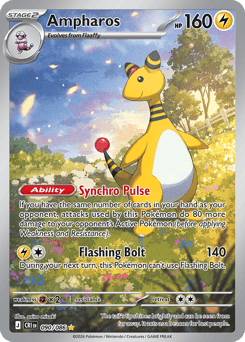
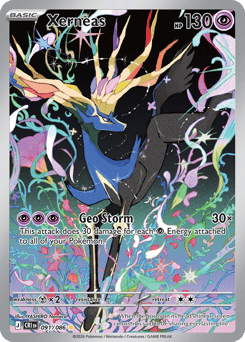
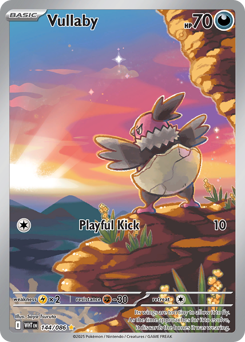
If you can stretch to $20
Most of these were under $10 a year ago. That is the point of the section.
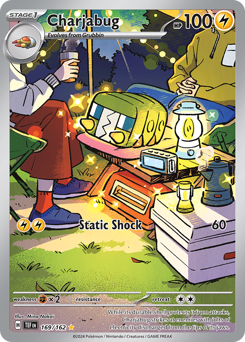
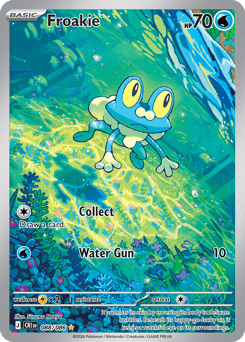
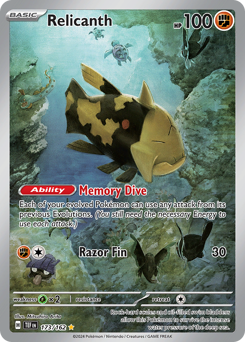
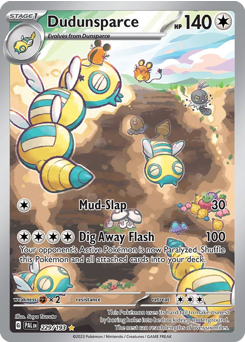
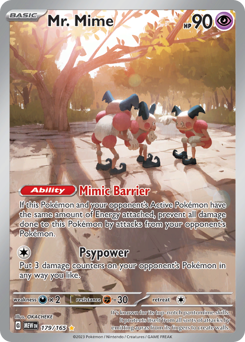
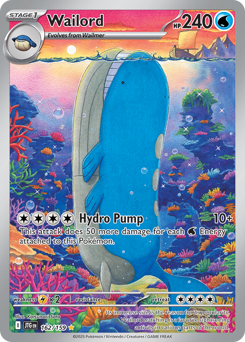
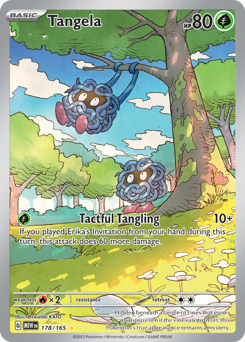
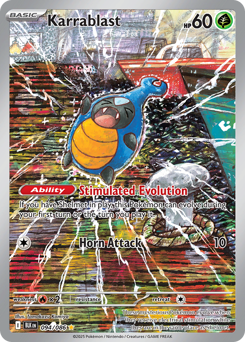
What a year did to these cards
TCGplayer market price for the week of Aug 2025 against the week of Aug 2026, taken from the same series at both ends. Different price feeds disagree by a few percent, so these will not always match the live figures above.
| Card | Aug 2025 | Aug 2026 | Change |
|---|---|---|---|
| Charjabug Temporal Forces | $3.72 | $8.84 | +138% |
| Tangela 151 | $6.20 | $13.80 | +123% |
| Mr. Mime 151 | $5.67 | $12.23 | +116% |
| Dudunsparce Paldea Evolved | $5.25 | $10.81 | +106% |
| Relicanth Temporal Forces | $5.27 | $10.11 | +92% |
| Dolliv Scarlet & Violet | $3.28 | $6.22 | +90% |
| Wattrel Twilight Masquerade | $2.91 | $4.81 | +65% |
| Chimecho Twilight Masquerade | $2.70 | $4.38 | +62% |
| Larvesta Surging Sparks | $2.08 | $2.57 | +24% |
| Noibat Journey Together | $4.72 | $5.04 | +7% |
| Clamperl Destined Rivals | $4.51 | $4.62 | +2% |
| Swinub Journey Together | $3.11 | $2.92 | -6% |
| Wailord Journey Together | $15.88 | $13.09 | -18% |
| Yanma Destined Rivals | $4.76 | $3.82 | -20% |
| Crustle Destined Rivals | $4.33 | $2.45 | -43% |
What an Illustration Rare actually is
It is the full-bleed art rarity introduced in the Scarlet & Violet era: the artwork covers the entire card with no border, and the Pokémon is usually placed in a scene rather than posed against a background. It sits below Special Illustration Rare, which is the same idea applied to ex cards with a heavier foil treatment and far lower odds. The distinction that matters for your wallet is supply, and it is not subtle. In the Phantasmal Flames pull-rate study run by the TCGplayer Authentication Center across more than 5,000 packs, the Illustration Rare slot came up 10.97% of the time, about one pack in nine, while Special Illustration Rares landed at 1.25%, roughly one in eighty. Mega Evolution and Chaos Rising measured within a fraction of a point of the same figures. An Illustration Rare is a rare you will actually see, and that is exactly why the good ones stay cheap.
One honest complaint before you spend anything
Illustration Rares still ship with no texturing. The foil is flat, and in a hobby where the tier above and the tier below both get embossing and patterning, that reads as an unforced error on the part of the largest entertainment property on the planet. It is the most consistent criticism the format attracts, and it is fair. It also does not change the recommendation: the art is the reason to buy these, the printing is merely adequate, and at four dollars adequate is a fine trade. If you want texture in hand, you are shopping for Special Illustration Rares and you are shopping at a different price.
How these twenty were picked
Every card below was opened and looked at before it went on the list. That sounds like a low bar, and it is, but it is not the bar most cheap-card listicles clear — the usual method is to sort a price column ascending and write adjectives. The filter here ran the other way round:
- Rarity had to be Illustration Rare exactly, verified against the card data rather than assumed from the price. No Special Illustration Rares, no full arts, no ex cards.
- Price had to be under $10 on the day the edition was built, using the same figures the rest of this site runs on.
- The art had to survive being looked at full-size. Several very cheap cards were cut at this step and a couple of more expensive ones argued their way on.
- Spread across sets and illustrators, deliberately. A list of twenty cards from two sets is a set review wearing a disguise.
- Where collectors genuinely disagree about a card, it is on the list and the disagreement is in the note. Two of these are divisive and it would be dishonest to present them as consensus picks.
What this page does that a normal list does not
The problem with any "best cards under ten dollars" article is that it starts rotting the day it is published. A year later half the picks are twenty dollars and the page is quietly wrong, so the usual fix is to silently edit the numbers and pretend the article was always right. This one is built the other way. The price we paid attention to on the day of each pick is frozen into the data and never rewritten, the current price is read fresh every time the site rebuilds, and the difference between the two is printed next to the card. When a pick climbs past ten dollars it does not get deleted — it gets a marker saying so, and eventually moves into a section of cards that outgrew the list. The record of being wrong is the interesting part, and a page that hides it is worth less than one that does not. This is edition one, so there is nothing in that section yet; there will be.
The fastest way to find your own: collect the illustrator, not the Pokémon
If you take one habit away from this page, take this one. Find a card whose art you love, look at the small credit line at the bottom left, and go and look at everything else that person has drawn. Illustrators have styles, styles are consistent, and you will almost always like the rest of their catalogue. It is also the cheapest way to collect that exists, because the market prices Pokémon and does not price artists — you are competing with almost nobody. A few illustrators get collected this way more than others, and three of them are on the list below: Mori Yuu, whose hand-hatched, old-field-guide look is unmistakable once you have seen it; Mitsuhiro Arita, who drew the Base Set Charizard and is still working, currently at about five dollars a card; and Tomokazu Komiya, whose crayon-and-scratch style looks like nothing else printed. Others worth following: Oswaldo Kato, sowsow, Nakamura Ippan, Saya Tsuruta, Takumi Wada, REND and Ayako Ozaki. Every one of them has a page on this site listing what they have drawn.
Why the cheap ones are cheap, and what that tells you
Three forces set the floor, and knowing them makes the list below easier to extend yourself. Supply is the first and biggest: one in nine packs, across a print run measured in millions, is a lot of copies. Species popularity is the second, and it is brutally narrow — if a card is not Kanto, not a starter, not a legendary and not something a large channel has waved at a camera, it stays near the bottom regardless of quality. Set sentiment is the third: sets that were widely available at normal retail prices produce cheaper singles than sets people had to fight for, which is why the recent Mega Evolution block is so well represented here. None of that is a prediction that these will go up. It is an explanation of why the price is currently unrelated to the picture, which is a much more useful thing to know than a forecast.
Buy them in threes and put them somewhere
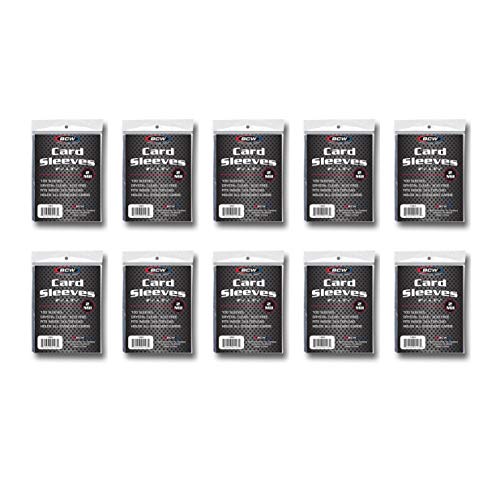
A three-dollar card behaves differently from a three-hundred-dollar one and should be treated differently. Buying two or three copies of something you love costs less than one mediocre chase card and lets you keep one in a binder, put one on a shelf and still have a spare to trade or give away. Penny sleeve them as they arrive, because the sleeve is what protects the surface and it costs a fraction of a cent. Beyond that the handling is genuinely relaxed: these are cards to enjoy, not assets to seal, and any page that tells you to grade a four-dollar Illustration Rare is doing arithmetic it has not checked. If a card graduates into being worth real money later, you will have plenty of warning, and this page will be one of the places you get it.


