Displaying a card is a trade, so make it on purpose
A card in a binder in a drawer is about as safe as a card can be, and it is also invisible. The moment you put one on a shelf you have accepted a cost, and the whole job of a display setup is to make that cost small enough to be worth paying. What most display pages get wrong is which cost they warn you about. They talk about dust and fingerprints and knocks, which are real but easy — a rigid holder solves all three for a few dollars. The cost that actually matters is light, it accumulates the entire time the card is out, and unlike a fingerprint it can never be undone. Everything below is organised around that one fact: pick the position first, the case second, and build the display so you can change your mind later.

The fading rule almost every display page gets wrong
The received wisdom is that ultraviolet light is what fades things, so a UV-blocking case makes a card safe to display. That is not what conservation research says. The Canadian Conservation Institute addresses the assumption head-on, and it is worth quoting because it is close to the opposite of what the marketing says: many museums, donors and framers have assumed the primary cause of fading is UV and that a good UV filter would prevent it, but for the colours that are sensitive to light, UV usually contributes less than half of the fading and often only one tenth. The rest is ordinary visible light — the light you turned on so you could see the card. The same source is blunt about the other half of it: the fading is utterly irreversible, and the only way to reduce it is to reduce light exposure. So a UV-rated case is worth buying and it is not a solution. It removes the fraction of the problem that is easiest to remove and leaves the majority of it standing. Sunlight is the extreme case rather than the only one — a card sitting in a sunbeam can visibly lose its reds within weeks — but a card under a bright ceiling light for three years is on the same curve, further along than you would guess.
Pick the wall before you pick the case
Position is free and it does more than any product on this page. Spend ten minutes before you buy anything: look at the room in the morning, in the afternoon, and with the lights on at night, and find the spot that stays dimmest across all three. Direct sun is the obvious disqualifier, but the sneaky one is a wall that catches an hour of low evening sun, because that is the brightest light most rooms ever see and it arrives when nobody is watching for it. The other places to rule out are about heat and moisture rather than light:
- Above a radiator, heat vent or fireplace. Warm air rises straight up the wall, and cards warp and curl long before anything looks scorched.
- Bathrooms and kitchens. Humidity swings are what make cards ripple, and a sealed display case traps whatever the room was doing at the moment you closed it.
- An uninsulated exterior wall in a cold climate. That surface runs colder than the room, which is where condensation forms.
- Anywhere a door swings, a chair backs into, or a pet can reach a shelf. Most display damage is not chemistry, it is a knock.
One card on a desk: the magnetic holder
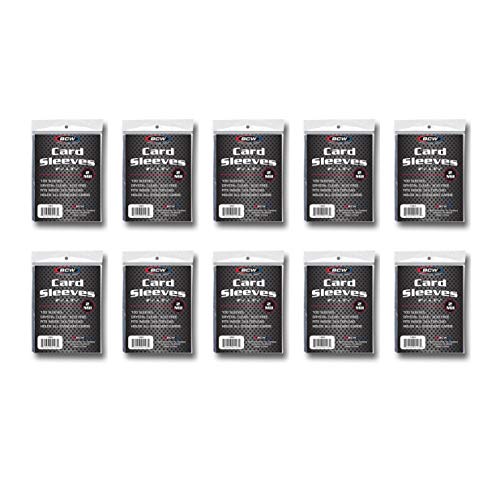
For a single card you want to look at every day, a magnetic one-touch holder is the default and it earns the spot. It is rigid on both faces, it closes on a magnet rather than screws, and the good ones are made without PVC, which matters because PVC is the plastic that quietly attacks cards over years. The size to buy is 35pt. Point sizes confuse people because the unit is so small: one point is a thousandth of an inch, and a standard Pokémon card runs somewhere around twelve to twenty points. The extra room in a 35pt holder is not slack, it is there so the card can go in wearing a penny sleeve — which it always should, because the sleeve is what keeps the card face from rubbing on the plastic and what lets you get the card out again without touching it. If a card meets any resistance going in, stop and size up rather than pushing. One honest caveat: Ultra Pro's UV holders say UV-protective on the packaging without publishing a percentage, so treat the label as a modest bonus rather than a licence to put the card somewhere bright.
Tiered stands and easels: cheap, and honest about what they are
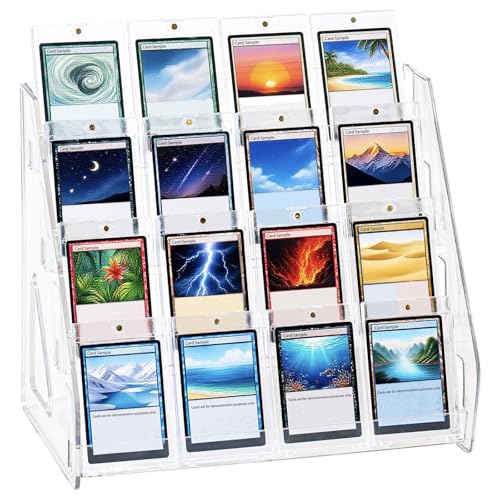
A tiered acrylic riser steps cards up in rows so the back rows are not hidden behind the front ones, which is the only real trick to showing more than about three cards in one place. They cost less than a booster pack, they look clean, and it is worth being blunt that they offer no protection whatsoever — a stand is furniture, not a case. That is fine as long as you know it. The right way to use one is to load it with cards that are already in holders rather than bare, which makes slot width the one specification to check before buying: most risers are cut for a bare or penny-sleeved card, and a toploader or a magnetic holder is several times thicker. If the listing does not state a slot width, assume bare cards. Individual easels have the same character — genuinely useful, zero protection, and prone to letting a card slide forward onto the desk if anything nudges the table.
Wall frames: nine cards is not an accident
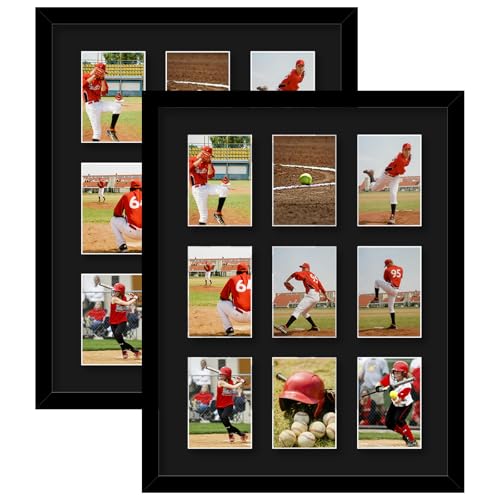
Multi-card wall frames come in threes, fours, nines, twelves and up, and nine turns up constantly because a 3×3 grid is a binder page taken off the shelf and hung. That makes it the natural format for anyone who already thinks in pages — an evolution line, a themed page, a set's full-art run. What separates a good frame from a bad one is how it holds the card. The design you want has a slot or a recess the card sits in, so it is supported by its back and edges. The design to avoid presses the card flat between a backing board and the glazing, because sustained pressure on a foil card is how you get a permanent shine mark, and because getting the card out again usually means prying. Two more checks: whether the glazing is glass or acrylic, and whether that acrylic carries a stated UV figure — which brings us to the number worth paying for.
What "UV-protective" should mean before you pay for it
Plain clear acrylic is not a UV filter in any meaningful sense. UV blocking comes from additives, and the gap between a sheet that has them and one that does not is the gap between most of the UV and almost none of it. The problem is that "UV protection" is an unregulated phrase and costs a seller nothing to print. The only version of the claim that means anything is a number:
- A published percentage. Look for a stated figure — 98%, 99%, 99.6%. A case that names a number has committed to something; one that only says UV has not.
- The number covers UV only. Even a perfect UV filter leaves the visible-light half of the problem untouched, which is why position still outranks plastic.
- Check both faces. Some frames put rated acrylic on the front and plain plastic or open backing behind — fine on a wall, not fine on a shelf that light reaches from both sides.
- Non-PVC, and stated. Contact plastic is a chemistry question separate from light, and any manufacturer who has thought about it will say so on the listing.
Graded slabs: no grading company publishes a UV rating
This surprises people who assume a slab is an archival enclosure. It is not sold as one. PSA, BGS and CGC all market their holders on authentication, tamper-evidence and physical protection, and none of them advertises a holder as UV-protective or publishes a filtering specification for it. That does not mean a slabbed card is in danger on a dim shelf, but it does mean the slab is not the thing protecting it from light, and a slab in a window is exposed the way any card is. If you want a display case over the top of one, size is the specification that matters and it varies by grader: a standard PSA or CGC slab runs roughly 3.16 by 5.32 inches and about a quarter of an inch thick, while a Beckett slab with subgrades is both wider and noticeably thicker, and a thick-card BGS holder is thicker again. A case cut for PSA will not close on a BGS slab, and a case cut for BGS will let a PSA slab rattle. Buy for the grader you actually own, and if you own a mix, buy for the thickest.
Wall shelves and ledges: the flexible option
A narrow wall ledge is the least glamorous entry here and probably the most practical. It holds whatever you stand on it — bare cards, toploaders, magnetic holders, slabs, a sealed booster pack — it does not commit you to a card count or a layout, and swapping what is on show takes two seconds and no tools. That last point is quietly what makes it the best conservation choice on this page, because it is the only format that makes rotation frictionless. A frame with nine cards fixed behind glazing gets rotated approximately never. The trade is that a ledge protects nothing on its own, so it is a mount for holders rather than a substitute for them, and a deeper ledge with a lip is worth the extra couple of dollars in any room with a door that slams.
The rotation habit that beats every case you can buy
Light damage is cumulative, which cuts the other way too: a card that is on display three months a year ages at roughly a quarter the rate of one that is out permanently. Rotating a display is therefore not a compromise, it is the single most effective move available to a collector, and it costs nothing. It also settles the question people get stuck on, which is whether to display an expensive card at all. Three rules make the whole thing easy. Display what you can replace, and keep the irreplaceable card in a binder or a box in the dark — the point of owning it was never that it is on a wall. Rotate on a fixed date rather than at random, because a changeover tied to something you already do is the only kind that actually happens. And photograph the display in the same light every time you change it, since fading is far too gradual to catch by eye and a photograph from two years ago is the only witness you are going to get.
DIY, 3D printing and the shortcut not to take
Custom stands are one of the genuinely good uses for a 3D printer, because what you usually want is a riser or a slot at a depth nobody sells — a step sized for slabs rather than cards, a ledge cut to a shelf you already own, an angled block for one specific holder. Print the furniture. What is not worth doing is printing an enclosure that touches the card face, for the same reason as any unknown plastic: you do not know what a given filament or resin gives off over years against a printed surface, and the failure mode takes long enough to appear that you will not catch it early. Keep the card in a holder from someone who has stated their material, and let the printed part hold the holder. The same logic rules out the classic shortcut of a hardware-store picture frame — mini frames in 2.5 by 3.5 inches do exist, but they are built to squeeze a photo against glass, which is exactly the pressure a foil card should never be under.
Quick picks by situation
If you want the short version, this is how the formats sort out once position is handled:
- One card on a desk or shelf: a 35pt magnetic holder, card penny-sleeved first. Cheapest good answer on the page.
- Six to sixteen cards in one spot: a tiered acrylic riser, loaded with cards that are already in holders. No protection of its own.
- A themed page on the wall: a 9-card frame with a slot design rather than a press-flat design, hung on the dimmest wall in the room.
- Graded slabs: buy the case for your grader's dimensions, and prefer one that publishes a UV percentage.
- A display you intend to change: wall ledges. The only format that makes rotation effortless, which makes it the safest one over years.
- Anything genuinely irreplaceable: a binder or a box, in the dark. Display a duplicate or a cheaper card from the same set instead.