What a small binder is actually for
Here's the thing about small binders: they're not starter binders you're supposed to outgrow. They do a different job than your big binder, and if you buy one knowing the job, you'll be happy with it. There are four jobs they're genuinely better at. A chase binder, meaning the twenty or thirty cards you'd actually show someone, in one place instead of scattered through 360 pockets. A trade binder, which is honestly the best use of the format. When you're heading to a meetup, league night, or a friend's house, you don't want to bring your whole collection. You want the handful you've already decided you're fine trading away. A 4-pocket makes that decision for you: if it's in the binder, it's on the table, and nobody's asking about a card that was never for trade. And if the day goes sideways, you lost a binder, not a collection. That matters even more when it's your kid carrying it (our collecting-with-kids guide covers the rest of the trading rules). Third: a kid's first binder. Small pages suit small hands, and it actually fills up, which feels like winning instead of homework. Fourth: gifts. Ten good cards in a small binder reads like a present. Ten cards rattling around a half-empty big one doesn't. If your reason isn't one of those four, get a 9-pocket.

And what a small binder is not for
Bulk, master sets, a Living Pokédex: wrong tool, and the math is rough. A 4-pocket holds 160 cards. A modern main set runs about 160 to 200 numbered cards, more like 230 to 260 once the secret rares are in, so one set doesn't even fit in one small binder, and a Living Pokédex would take seven of them lined up on a shelf. Small binders also aren't much cheaper than full-size ones, so filing a collection into them means paying for the same protection several times over. If you're storing cards instead of showing them, our binder guide covers the full-size formats and their capacity traps, and the storage guide covers what belongs in a box instead of a binder at all.
The 4-pocket (2×2): the small format that actually works
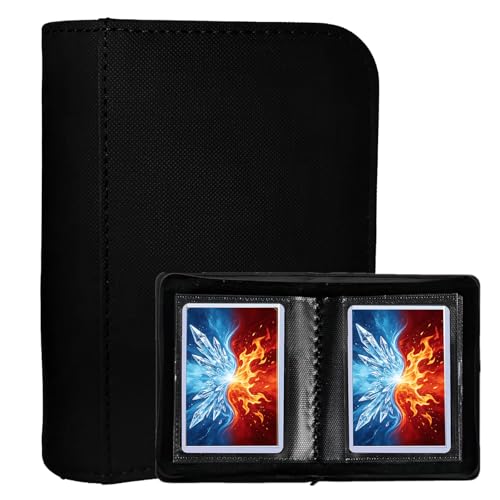
If you're only buying one small binder, buy this one. The Vault X 4-Pocket Exo-Tec Zip Binder is the one everything else copies, and its spec sheet sets the bar: 20 double-sided pages, four side-loading pockets per side, 160 cards, 68 × 97mm pockets that take double-sleeved cards, acid-free PVC-free pages, a padded water-resistant cover, and a zip. That's the same feature list as the full-size 9-pocket with nothing cut, which is the whole point. Small formats are where brands usually trim corners, so the small binder that doesn't is the one worth paying for.
It is smaller, but it does not save you space
One expectation to fix before you buy: a small binder doesn't store cards more efficiently. The 4-pocket is 245 × 190mm against the 9-pocket's 350 × 260mm, about half the shelf space, and it holds 160 cards against 360, a little under half. Per card, you gained nothing. You bought a smaller object, not a denser one. Which tells you what you're really paying for: portability and how the page frames cards, not efficiency. And even the portability has limits. Full, it's about 45mm thick. Fine in a backpack or a big coat pocket, not happening in jeans. It's small the way a paperback is small.
What a 2×2 spread does well
Four pockets changes how you lay out cards, and it's honestly the fun part of the format. Four is a complete thought. A three-stage evolution line plus its ex fills the page exactly, where the same idea in a 3×3 leaves you a hole to stare at. Four starters. Four cards from one artist. A colour run. And since the binder opens to two pages facing each other, a spread gives you eight cards: the four best pulls from a set on the left, the four you're still chasing on the right. The limit is what makes it work. With four slots, every card has to earn the spot. A big binder never makes you choose.
The 1-pocket (1×1): a showcase format, and an honest niche
These are a little funny at first, a whole binder where every page holds exactly one card, museum-style. It genuinely looks great. It's also a narrower buy than it seems, and two things are worth knowing before you go searching. First: no major brand makes one. Vault X gets searched alongside '1 pocket binder' constantly, and their range starts at 4-pocket, so everything out there is from generic sellers. That means the checklist below matters more here than anywhere else on the site. Second: there are two variants, and buying the wrong one is how people waste money on this format. The plain version has normal pockets for sleeved cards: 20 double-sided pages, 40 cards, usually a zip and an embossed faux-leather cover. The toploader version has sleeves cut for 3"×4" rigid holders, fits about 30, and is what most people searching for this format actually want, one protected chase card per page. Sleeved cards, plain version. Cards already in toploaders, toploader version, but check your toploader thickness first, because the sleeves fit standard 35pt and the fat 55pt-and-up holders for heavy cards may not go in. And be honest with yourself about the count. Thirty to forty cards is a lot of binder for a handful of cards, and if you really just want one card on display, a magnetic one-touch on a shelf shows it off better and never needs opening.
Toploader versions, and the pocket math behind them
The toploader variants exist because of a measurement, not a preference. A normal binder pocket is about 68 × 97mm, sized for a sleeved card. A 3" × 4" toploader is about 76 × 102mm. That's bigger than the pocket in both directions, and it will not go in no matter how you angle it. So if your best cards live in toploaders, a toploader binder isn't an upgrade, it's the only binder that fits them at all. The sensible size for this is the 4-pocket toploader binder. Something like the KUOOKING holds 128 or more toploaders, which is a realistic count for cards that actually earn one. The small end of the same idea is the 1-pocket toploader binder: about 30 cards, one per page, sleeves cut for 35pt holders, ringless with a zip. That's the literal product people mean when they search '1 pocket binder toploader.' The usual tradeoffs apply. It's heavy for what it holds, toploader plastic scratches and isn't archival, and anything truly valuable is still safest slabbed. Save it for cards where the rigidity is doing real work.
The same four-point checklist, at small scale
The checklist doesn't shrink with the binder. If anything, cheap small binders fail it more often than cheap big ones, because this size is full of unbranded sellers. All four, before you buy:
- Side-loading pockets. This matters more on a small binder, not less. It gets carried, tipped, and tossed in bags, and a top-loading pocket is an open mouth for a card to slide out of.
- A zip. A strap is fine on a shelf, but a binder that travels wants its pages sealed and the dust kept out. Most decent small binders have one, so insist on it.
- Acid-free, PVC-free pages. If the listing doesn't say it, assume the worst. This is the spec generic sellers quietly leave off, and PVC clouds and damages cards over the years.
- Padded covers on a ringless build. Everything worth buying at this size is already ringless, so the padding is the tiebreaker. It's what saves the binder that falls out of a bag.
The mini binder that comes with a pack
One more worth knowing about, because it's a real product and a common search: the official Pokémon Mini Portfolio. It holds 60 cards, comes with a sealed booster pack, and gets reissued with new art a couple of times a year. It's not built like a Vault X. It's a light portfolio with printed art, no padding, no zip, so it's not where good cards should live. But as a gift or a kid's first binder it's close to perfect: the pack makes opening it an event, 60 cards is a goal a kid can actually finish, and it's cheap enough that a bent cover isn't a tragedy. Add penny sleeves and it'll do its job for a year. When the collection outgrows it, that's your sign it's time for the 4-pocket.
Quick picks by use case
If you already know your reason, here's the short version:
- A chase binder for your best raw cards: the 4-pocket zip binder, cards penny-sleeved, kept on a shelf rather than in a bag.
- A trade binder you carry: also the 4-pocket zip. Everything in it is tradeable, which turns the small capacity into a feature.
- A stack of cards already in toploaders: the 4-pocket toploader binder, which holds 128 or more, because standard pockets physically won't take a 3" × 4" holder.
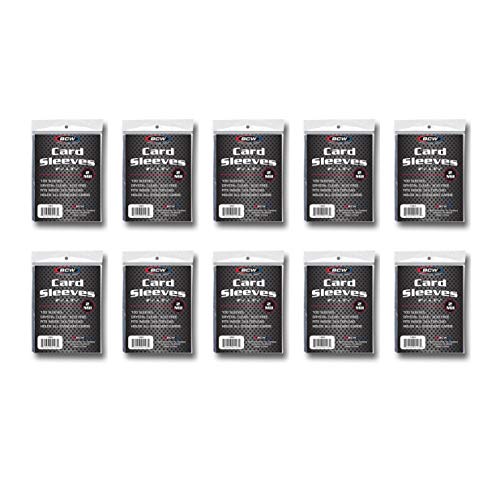
- A kid's first binder, or a gift: the official Mini Portfolio with its booster pack, plus a bag of penny sleeves.
- A few chase cards in toploaders, shown one per page: the 1-pocket toploader binder, with sleeves cut for 3" × 4" 35pt holders, about 30 cards.
- One sleeved card per page, museum-style: the plain 1-pocket album at around 40 cards. Though for a single card on display, a magnetic one-touch on a shelf beats either.
- A set you're completing, bulk, or a Living Pokédex: none of the above. Buy a 9-pocket or larger and read the full binder guide.